
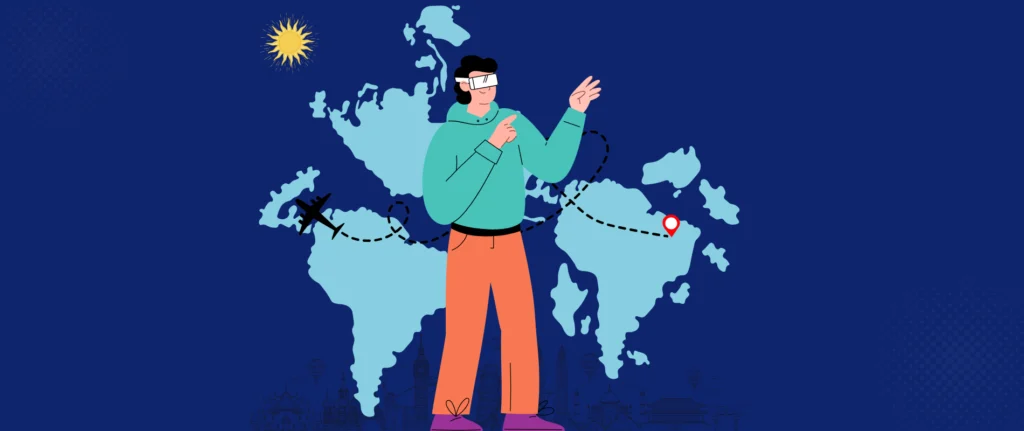
The tourism industry is going through a tremendous shift. As digital technology gets better, the metaverse is becoming a powerful part of everyday travel experiences. From virtual previews of places to fully immersive cultural experiences, this digital frontier is transforming how we search, plan and experience the world.
It’s not enough for professionals and businesses to just keep up with trends. They also need to understand how technology may make travel more accessible, eco-friendly and enjoyable.
Understanding Metaverse Tourism
Metaverse tourism uses virtual reality (VR), augmented reality (AR), and 3D digital environments to generate travel experiences that seem real. Instead of just gazing at pictures or movies, these solutions let you engage with places, landmarks and cultural sites.
The technology enables individuals to walk around hotels, explore city streets, visit museums and go to cultural events all before they plan a vacation or as distinct experiences when they can’t travel in person. This is more than just fun, it’s a vital tool that is transforming the way tourism companies do business and the way travellers make decisions.
Main Reasons for the Growth of Metaverse Tourism
In the industry, there are a lot of reasons why virtual travel experiences are becoming more popular.
- Better Accessibility: People often can’t travel because of money, time or physical limitations. A lot of these obstacles go away with virtual experiences which makes it easy for more people to go on cultural and educational trips. People who have problems moving about, don’t have a lot of money or are very busy can now get to places that were hard for them to get to before.
- Informed Decision-making: Travel companies are realising that virtual previews make customers significantly happier and less inclined to cancel their reservations. People who want to go on vacation may now look at hotels, take tours of the area and learn more about the amenities than ever before. This gives individuals more faith in what they buy and makes them less likely to be disappointed.
- Sustainable Tourism Solutions: Cultural heritage sites and natural areas have a big problem with too many tourists. Virtual choices are great because they enable people to see sensitive places without hurting them. This plan protects cultural things while letting people use them.
- Efficiency in Operations: Businesses can use metaverse platforms in many ways to market themselves and connect with customers. Virtual showcases don’t cost as much money over time as traditional marketing approaches, but they still give you useful interaction statistics and a worldwide reach.
Putting it into practice in the real world and in the industry
Some of the greatest names in tourism are already using parts of the metaverse in their daily work.
- Aviation & hospitality: Major airlines have made virtual reality experiences that show off locales and the insides of planes. This lets customers pick the best routes and services for their trips. Before guests book a room, hotel firms provide them with virtual tours of their buildings. These tours let tourists see the rooms, services, and the region around them. This makes things clearer and raises the rate of conversions.
- Destination Marketing: Cities like Dubai and Seoul have created whole virtual worlds where individuals who might like to visit can look around at famous places, try out activities and plan their visits. There are two main reasons to use these platforms: to assist in planning vacations and to help businesses obtain more customers.
- Cultural Institutions: Museums and historic sites from all around the world have put their digital content online. The Smithsonian and the British Museum are two examples of places that offer virtual exhibitions that let people see items up close that they couldn’t see in person. These shows also reach folks all over the world who may never be able to see them in person.
- Educational Integration: People have employed digital recreations of historical events in ways that no one expected, at school and for research. Detailed recreations of old towns and times are helpful learning tools that can be used with standard educational materials.
The Business Perspective
There are both positives and negatives to metaverse tourism from a business point of view.
Companies may get more clients with this technology without having to build more buildings. A hotel can show off its facilities to thousands of people at once and a destination can advertise itself around the world for less money.
Businesses could analyze the resultant data of a virtual experience to gain perceptions into consumer desires and behavior and subsequently improve their offerings and eventually business planning. Companies could learn what features consumers use the most, the time consumers spend using the features and where in the process consumers experience trouble making a choice.
Whereas, if you want to be successful, you have to invest your money wisely. Quality is key. Virtual experiences can harm your business image if not executed well. Businesses should understand the cost of producing engaging digital experiences in relation to factors such as how much they might affect bookings and how effectively they will encourage a customer’s attention in the long term.
Challenges and Practical Limitations
There are actual concerns with metaverse tourism that everyone who is involved should know about, even though it has a lot of potential.
- Technology Access: Not everyone who might wish to use high-quality immersive experiences has the proper technology and internet connection right now. This creates a digital gap that stops the technology from reaching everyone.
- Experience Authenticity: No matter how advanced they are, digital simulations can’t really mimic the sensory richness and spontaneity of travelling in person. The tactile, smell and social parts of travel are only available through direct encounters.
- Integration complexity: Companies that want to add metaverse capabilities to their current operations need technical know-how, ongoing maintenance and personnel training. These challenges with implementation can be especially problematic for smaller organisations that don’t have as many resources.
- Understanding the Market: Diverse people and markets have very diverse ideas about virtual travel experiences. You need to know what these preferences are in order to deploy efficiently.
Looking Ahead: Strategic Implications
The trend shows that virtual and real travel will work together more and more, rather than against each other. New hybrid models combine face-to-face interactions with digital upgrades. For example, augmented reality overlays that offer historical context to heritage sites, the ability to attend real-life events virtually and digital orientations that make the next real-life encounter better.
More people in diverse markets will probably start using technology as it becomes easier to access and less expensive. Companies that add features to the metaverse today will be ready for this transformation. The factors in the environment are also essential. As more and more people and businesses are under pressure to lower their carbon footprints, virtual choices for some types of travel, such as business meetings, conferences and inspections, may not only be useful but increasingly expected.
Conclusion: A Balanced Approach
The rise of metaverse tourism has changed the way we think about travel and meeting new people from other cultures. It gives the tourism industry the tools it needs to make customers happier, reach more people and cope with environmental problems.
The best way to do this is to realise that virtual experiences have different goals from going on a real trip. They are great for planning and previewing trips, finding ways to get around and as backups when you can’t travel. They don’t take the place of direct cultural involvement and serious investigation; they make them more important.
The future of tourism will undoubtedly be shaped by the integration or the smooth blending of digital tools with real-life encounters. This will make travel more knowledgeable, easier to get to and better for the environment. People and businesses that know how to use both sides of this changing landscape will have the best chance of success. When it comes to tourism, the metaverse isn’t about choosing between real and virtual; it’s about exploiting each one where it works best.