
When we introduced our hybrid AI-human vetting framework in March 2026, the story was picked up by Associated Press, Barchart, FinancialContent and Business Insurance. What follows isn’t really about that coverage. It’s about what sits underneath it: the problem the framework exists to solve and the principles we haven’t compromised on while building it.




Why We Got Published
We didn’t announce a product. There was no platform to unveil, no funding round to celebrate, no new market to claim. What we put in front of journalists was a methodology, a structured, repeatable way of solving a problem nearly every business runs into the moment it hires beyond its own city. That distinction is worth sitting with. When a newsroom covers a methodology rather than a launch, it usually means they’ve judged the underlying problem to be real and shared, not just useful to the company describing it.
A few things likely shaped how the story was received:
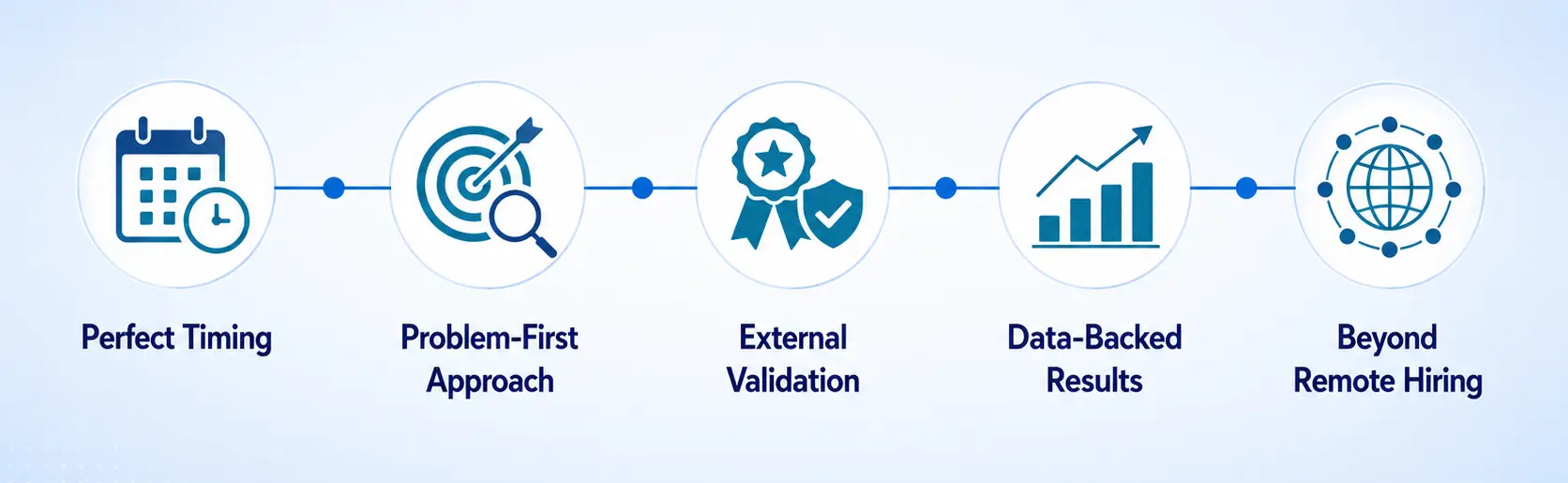
- The timing did some of the work for us. Remote hiring stopped being an experiment years ago; it’s simply how hiring happens now across most sectors. What used to read as bad luck, a hire that quietly underperformed or left early, is now understood as a pattern with a name and a cost attached to it.
- We led with the problem, not with ourselves. The pitch to press centred on why remote hiring keeps going wrong and what a structured response to that looks like. Citadel Coworkers was the answer to that question, not the headline itself.
- Outside validation carried weight that a press release alone couldn’t. Acknowledgment from institutions connected to the G20 and the MSME sector gave the framework a layer of scrutiny that purely commercial claims don’t usually get.
- We backed the claims with numbers a reader could actually test. A fit rate in the mid-90% range, against an industry norm of 60 to 70 percent and a 30 to 40 percent cut in shortlisting time aren’t abstractions; they’re figures a business owner can hold up against their own last three hires.
- The framework has also drawn interest from outside. The hiring conversation entirely, from operators asking whether the same evaluation logic could apply to other high-stakes, low-visibility decisions. That’s not something we set out to build for, but it’s a reasonable signal that the underlying idea travels further than remote hiring alone.
The coverage, in short, reflected that what we built was considered a legitimate contribution to a conversation the business community is already having, not simply marketing material dressed in the language of innovation.
The Problem We Set Out to Solve
Remote work has put a talent pool within reach that would have been genuinely hard to access a decade ago. A business in one country can now hire someone whose entire working life happens somewhere else, across time zones, cultures and working norms it may never fully see. That access is real and it’s valuable.
What hasn’t caught up is our ability to judge who’s actually right for the role inside that pool. Traditional hiring leaned on things that only show up in person or close to it: how someone handles being interrupted mid-task, how they respond when a brief is vague, whether they’re someone a team naturally organises around. None of that survives a thirty-minute video call particularly well and a polished resume was never built to carry that weight.
What’s left is a gap between how confident a hiring decision feels and how reliable it actually is. That gap isn’t theoretical:
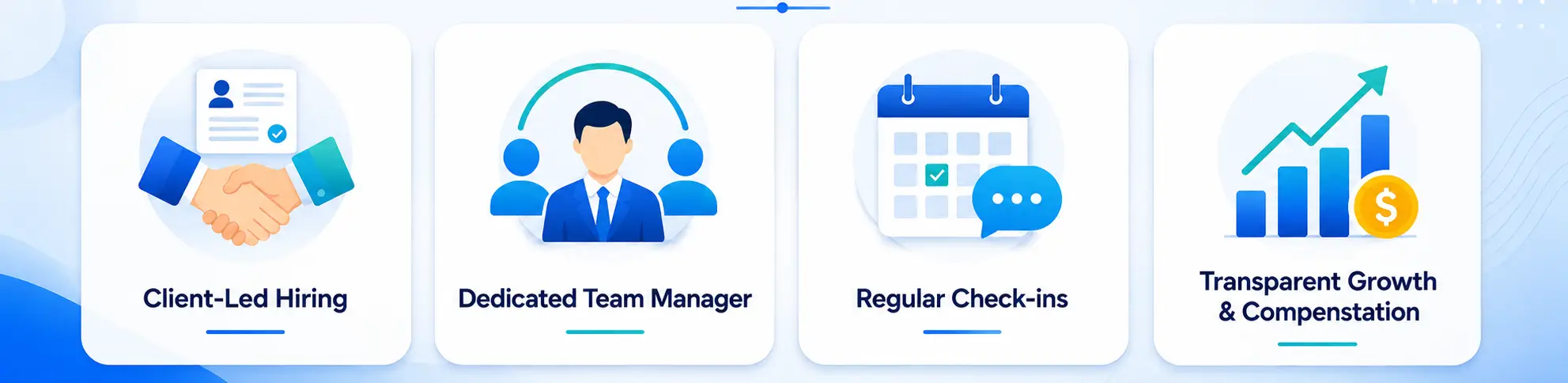
- A bad hire typically costs approximately 30 percent of that person’s first-year salary, a hit that lands hardest on smaller businesses with the least buffer to spare.
- Somewhere between 30 and 40 percent of remote hires fall short of what was expected of them, going by current industry fit-rate figures of 60 to 70 percent.
- When someone leaves within the first few months, it isn’t just their own role that’s affected. Delivery slips, teammates absorb the gap and the search restarts from the beginning, at full cost, with less patience left over.
- Most businesses simply don’t have the internal machinery to vet a remote candidate the way they’d vet someone walking into their office every day, so the final call ends up resting on less than it should.
None of this is a minor operational headache. It may be the single hardest part of building a distributed team and it’s stayed unresolved because most solutions on the market pick a side, either move fast or vet properly, rather than holding both at once.
How Citadel Approaches This
Nothing in this framework depends on a technological breakthrough. What we’ve built is closer to discipline than invention: the same rigorous process applied every time, to a problem most businesses already recognise but few have actually written down a fix for.
A handful of principles hold the whole thing together:
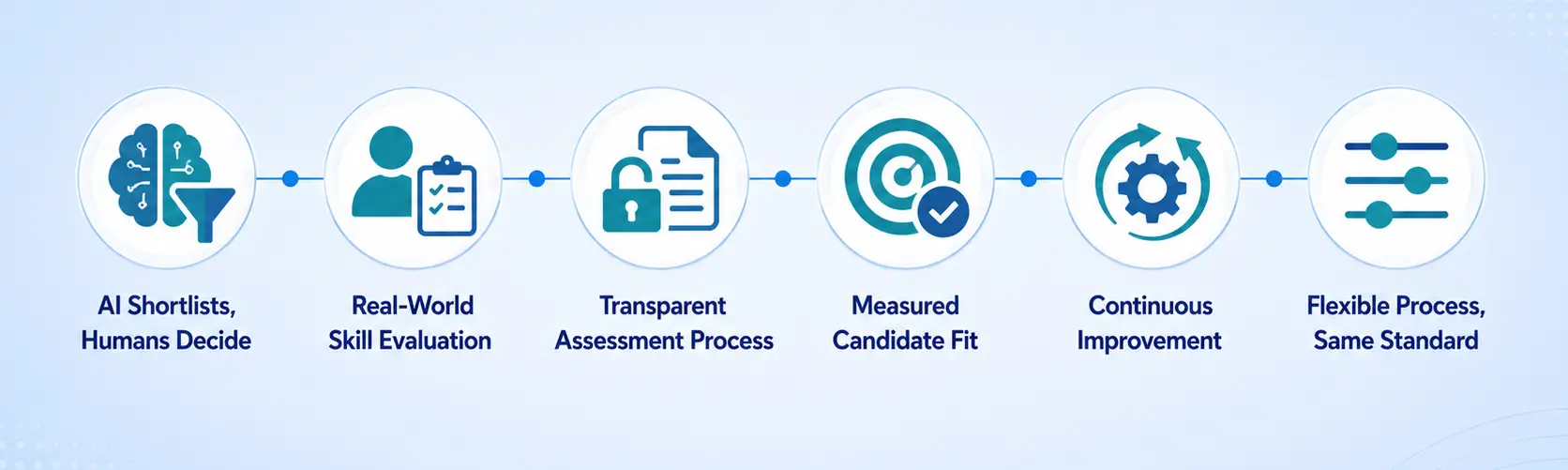
- AI narrows the field; it doesn’t make the call. Early on, artificial intelligence measures candidates against what the role genuinely demands, scoring them without the unconscious bias that tends to creep into manual screening. It shortens the list. It never gets the final word.
- People make the final decision and they’re tested in conditions that resemble the job, not a simulation of it. Once AI has done its part, our recruiters take over, dropping candidates into scenarios with real deadline pressure, briefs that are deliberately incomplete, feedback coming from more than one direction and coordination across time zones that don’t line up neatly. It’s an unglamorous way to see how someone thinks when nothing is tidy, which is closer to the actual job than most interviews get.
- Candidates are told exactly what they’re walking into. There’s no hidden stage designed to catch someone off guard. Beyond being the fairer approach, it tends to produce more honest behaviour, since people act differently under artificial secrecy than they do when they understand what’s actually being asked of them.
- Fit gets measured, not guessed at. It isn’t a checklist of past titles and certifications. It’s evidence, gathered under conditions built to resemble the role, of how someone actually operates.
- The process itself keeps getting sharper. Patterns from one engagement inform how the next one is calibrated, so the framework isn’t a fixed template gathering dust; it’s something that tightens with use.
- No two clients get an identical process, even though every client gets the same standard. What flexes is the application, never the bar itself.
Our own hiring data puts the outcome of all this at a fit rate consistently in the mid-90% range. In practice, that means fewer early exits, shorter ramp-up periods and teams that hold together longer- the kind of outcome that matters to any business and matters most to the ones that can least afford to get it wrong twice.
Why This Matters Beyond Our Clients
None of this is confined to one business or one part of the world. It shows up wherever companies are hiring people they may never meet in person, across the United States, the United Kingdom and the economies of Southeast Asia, the Gulf, Australia and continental Europe alike.
Small businesses feel this most acutely, because there’s no spare capacity absorbing the fallout when a hire doesn’t work out. A single bad decision ripples through delivery timelines, client confidence and whatever stability the business was relying on to keep growing. That’s a very different exposure than a large company faces when one hire underperforms.
The usual alternatives- freelance platforms, general recruitment agencies, referrals from someone’s network- each get a business partway there. They offer access, reasonably well, but rarely the depth of evaluation a genuinely important hire deserves. That depth has historically been something only larger organisations had the resources to build in-house.
What we’ve tried to do is put that same depth within reach of businesses that don’t have those resources. Whether it’s a single specialist role or a full team being built out, the process doesn’t change, and neither does the rigour behind it. Nobody has to build a vetting function of their own to get there. They get the output of a methodology that’s been tested and adjusted across real engagements, candidates evaluated properly rather than rushed through.
A Reflection
We’ve taken the press coverage seriously, not as proof that Citadel Coworkers is doing well as a business, but as confirmation that the problem we’re working on is one the wider business world already recognises and is actively trying to solve.
Press wasn’t the goal when we built this. A poorly made remote hire is a real cost to a real business and the people we work with deserve a more dependable route to finding who they actually need. Whatever attention followed was simply what happens when that gets said plainly, backed by results specific enough that someone could actually go check them.
That’s the bar we hold ourselves to. It’s also the bar we’d ask anyone evaluating us to use. The full press release and coverage details are available here: