

A marketing manager checks his SEO dashboard and sees 1,240 new backlinks in green this quarter. It looks like undeniable progress. Then he checks where the site actually ranks: barely a shift, while a smaller competitor with a fraction of that link count still sits comfortably above him on page one and keeps turning up in the AI Overview and ChatGPT answers on the same searches.
In this blog, we lay out the facts of what the independent, published research actually says about referring domains, SEO and Generative Engine Optimization (GEO) and what we’re seeing on the ground working with real member businesses at Citadel Coworkers, as we continue building out a fuller report on our own client data.
The Real Reason Search Engines (and AI Answers) Trust Some Sites More Than Others
Search rankings are, at their core, a trust exercise. Google isn’t measuring how loud a website is; it’s measuring how many independent voices across the internet are willing to point toward it. A hundred links from one enthusiastic partner site carry far less weight than ten links from ten unconnected, credible sources.
AI answer engines run on a related but distinct version of the same question: not just who links to you, but who’s talking about you at all, linked or not. That distinction shows up clearly in the data below and it’s the reason SEO and GEO need to be discussed together rather than as an afterthought to each other.
What Is a Referring Domain
A referring domain is any unique website that links to yours, no matter how many individual links it sends. If a single trade publication links to your site from ten different articles, that’s ten separate links but only one unique referring domain. Search engines weigh the second figure more heavily, because it reflects how widely your content is recognized, not just how often.
The Evidence for SEO
In an analysis of roughly 920 million pages, Ahrefs found that the number of referring domains was the single strongest correlating backlink factor for search rankings a stronger signal than raw backlink count. Semrush’s own ranking factors research shows the same pattern from a different angle: pages ranking in the #1 spot average well over 200 referring domains, while pages sitting at #10 average fewer than 80.
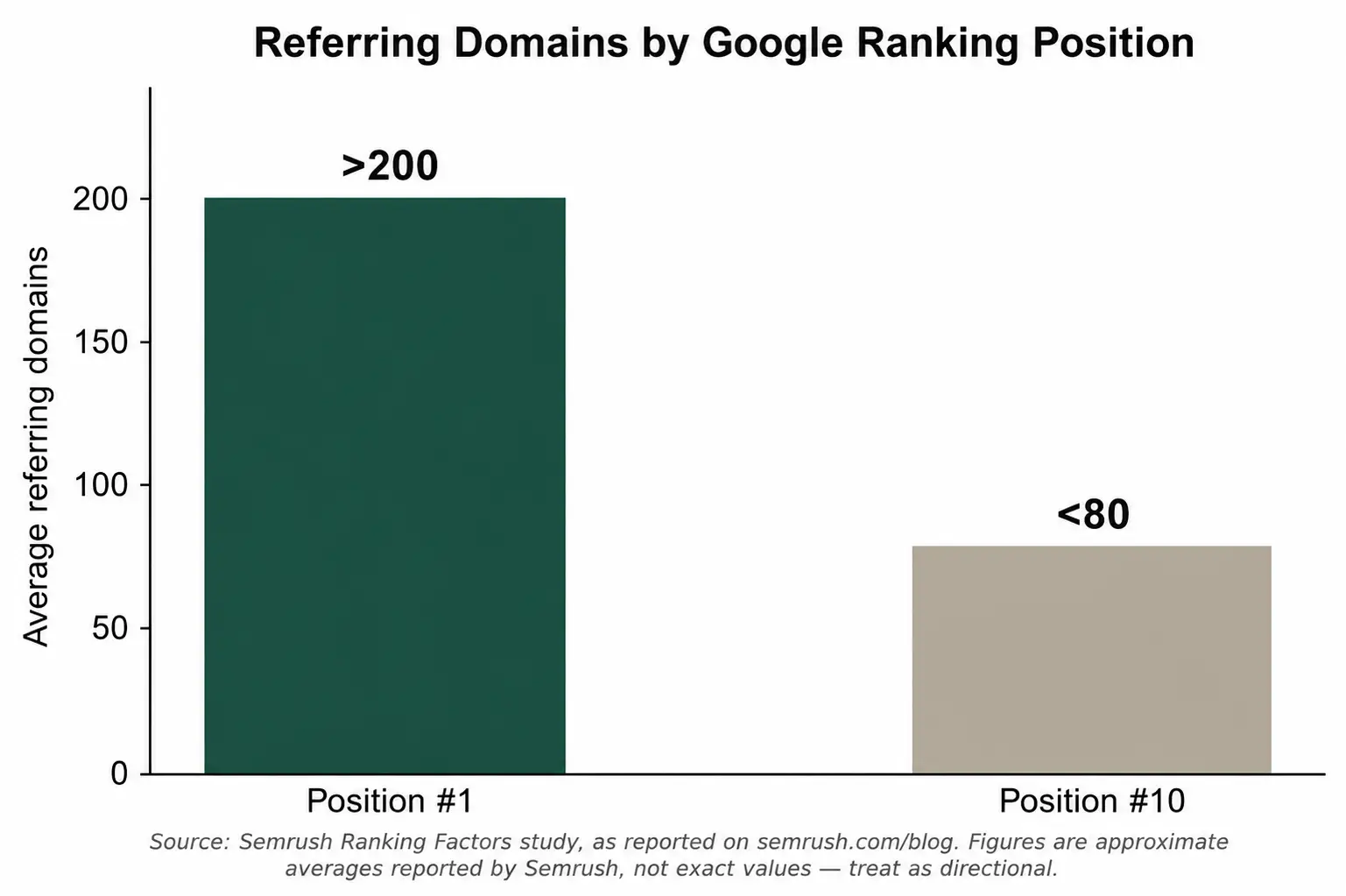
That’s roughly a threefold gap between the top and bottom of page one, tracking a single metric. It’s a correlation, not a proven cause, but it holds up across large-scale studies from more than one research team, which is a meaningfully stronger basis than a single anecdote.
The Evidence for GEO
Ahrefs’ analysis of 75,000 brands found that referring domains still correlate positively with showing up in Google’s AI Overviews, but the strongest signal by a wide margin is something else: unlinked brand mentions text about your business on other websites, whether or not it includes a link.
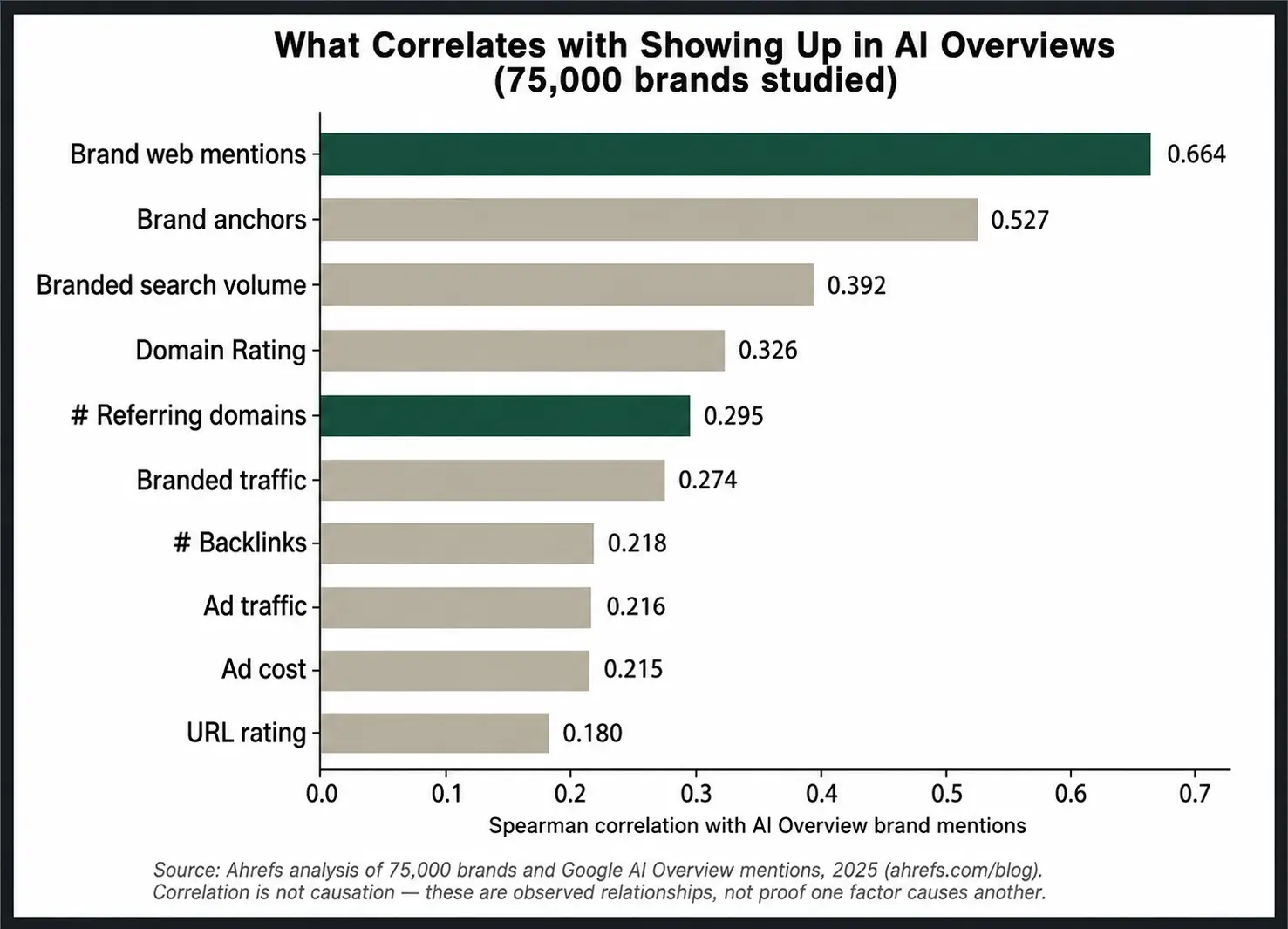
Brands in the top quartile for web mentions received roughly ten times more AI Overview mentions than those in the next quartile down. Separate research from Seer Interactive, studying brand visibility in ChatGPT specifically, found a similar pattern: backlinks and domain authority correlated only weakly with being mentioned, while broader keyword and search-visibility signals correlated far more strongly.
The honest takeaway: referring domains haven’t stopped mattering for GEO, but they’re no longer the main event. The activity that earns a referring domain a feature in a trade publication, a mention in local news or a partner referencing your work very often earns an unlinked brand mention in the same moment. Build for one and you tend to get both.
Why Quality Outranks Quantity in Every Link Profile
A healthy link profile isn’t built by chasing a single number. It’s built by asking which domains are worth being recognized by, and why. Four qualities tend to separate a link or mention that actually moves both rankings and AI visibility from one that just sits there:
- Topical relevance → a mention on a site your real customers already read
- Independent origin → not part of a network of related or self-owned properties
- Editorial placement → embedded within genuine content, not a directory footer
- Established trust → a domain with its own credible history and audience
None of these qualities show up in a simple link count. They only surface when someone actually looks at where the links and mentions are coming from.
What We’re Seeing Inside Citadel Coworkers
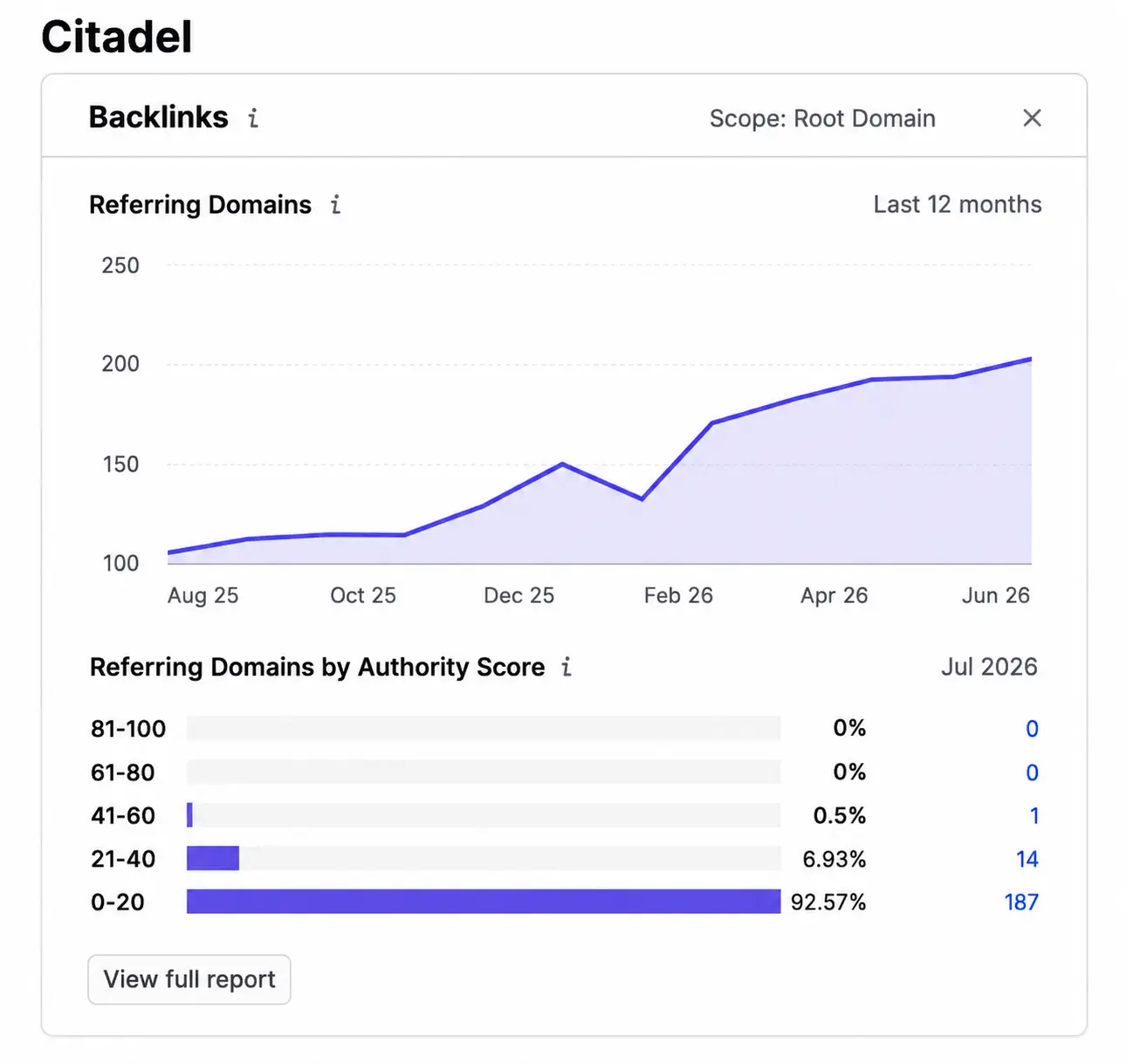
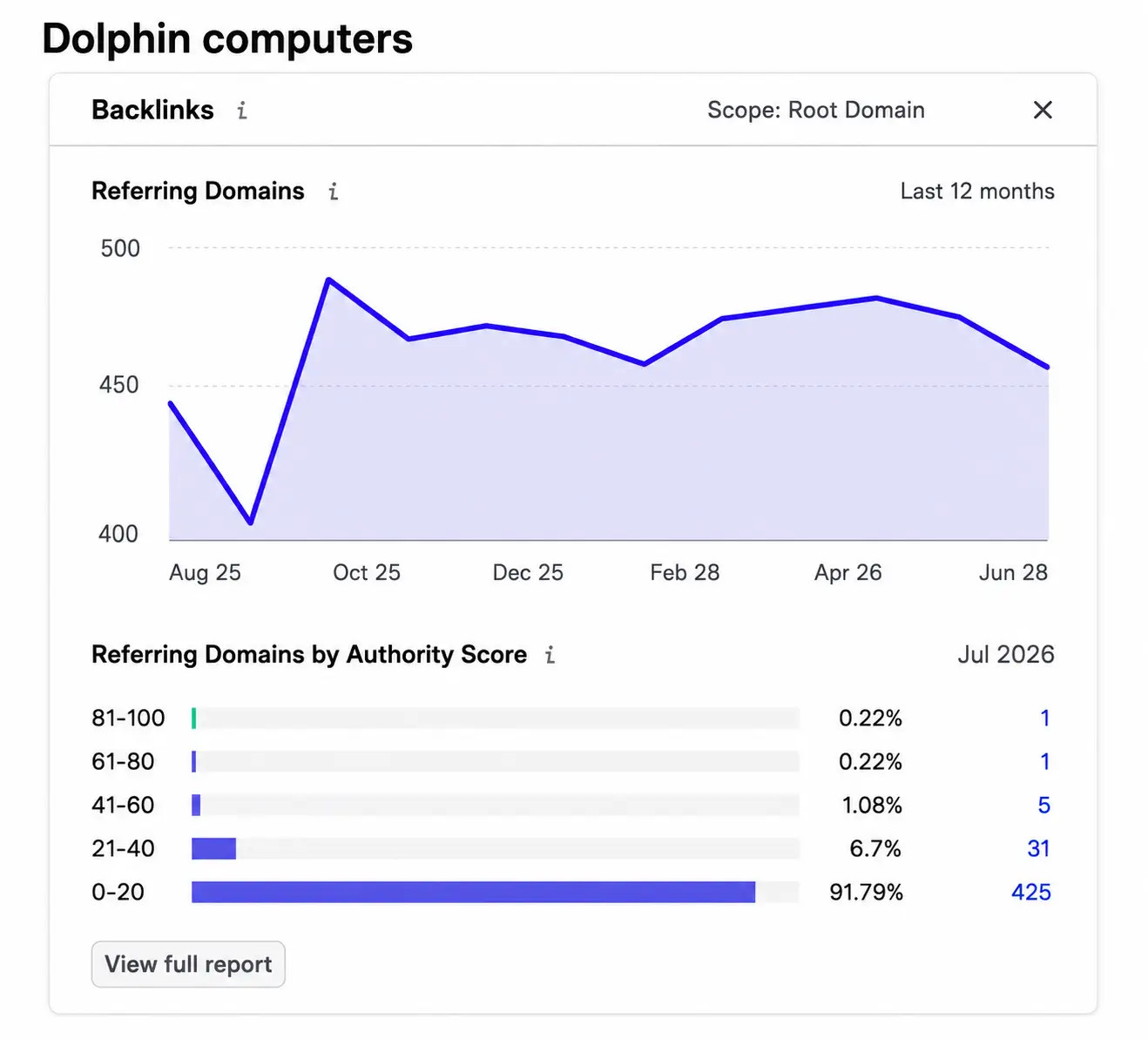
The research above explains why referring domains and brand mentions matter. What that looks like in practice, based on what we observe working alongside our own member businesses. We’re compiling a fuller data-backed report on this with real client specifics, timelines and before/after numbers and will publish it once that work is complete. In the meantime, here are the patterns that show up consistently:
A single credible feature tends to outperform months of scattered outreach. Across the businesses in our network, we’ve repeatedly seen one relevant mention of a chamber of commerce feature, a joint event covered by local press or a partner referencing a member’s work in their own content do more for both search visibility and AI mentions than a long stretch of generic directory submissions. That tracks with the research above: a single high-quality placement generates a referring domain, and it usually generates several unlinked mentions as the story circulates.
The strongest links come from relationships, not requests. The member businesses that build a durable link and mention profile aren’t the ones sending the most outreach emails; they’re the ones showing up at the same events, sponsoring the same local causes and getting introduced to the same regional press contacts, again and again. That repetition is what turns one feature into an ongoing source of mentions rather than a one-off.
Community touchpoints do double duty for SEO and GEO without extra effort. A handful of things we see happen naturally inside the Citadel Coworkers ecosystem:
- A professional business address and listing that local directories and press already trust
- Cross-promotion with fellow member businesses through shared events and content
- Community features and spotlights that generate organic press interest
- Introductions to local organizations, associations and media contacts
None of these were designed as an “SEO tactic” they’re just how a connected business community naturally operates. But each one tends to produce exactly the kind of independent, relevant, editorially placed mention that both Google and AI answer engines are built to reward.
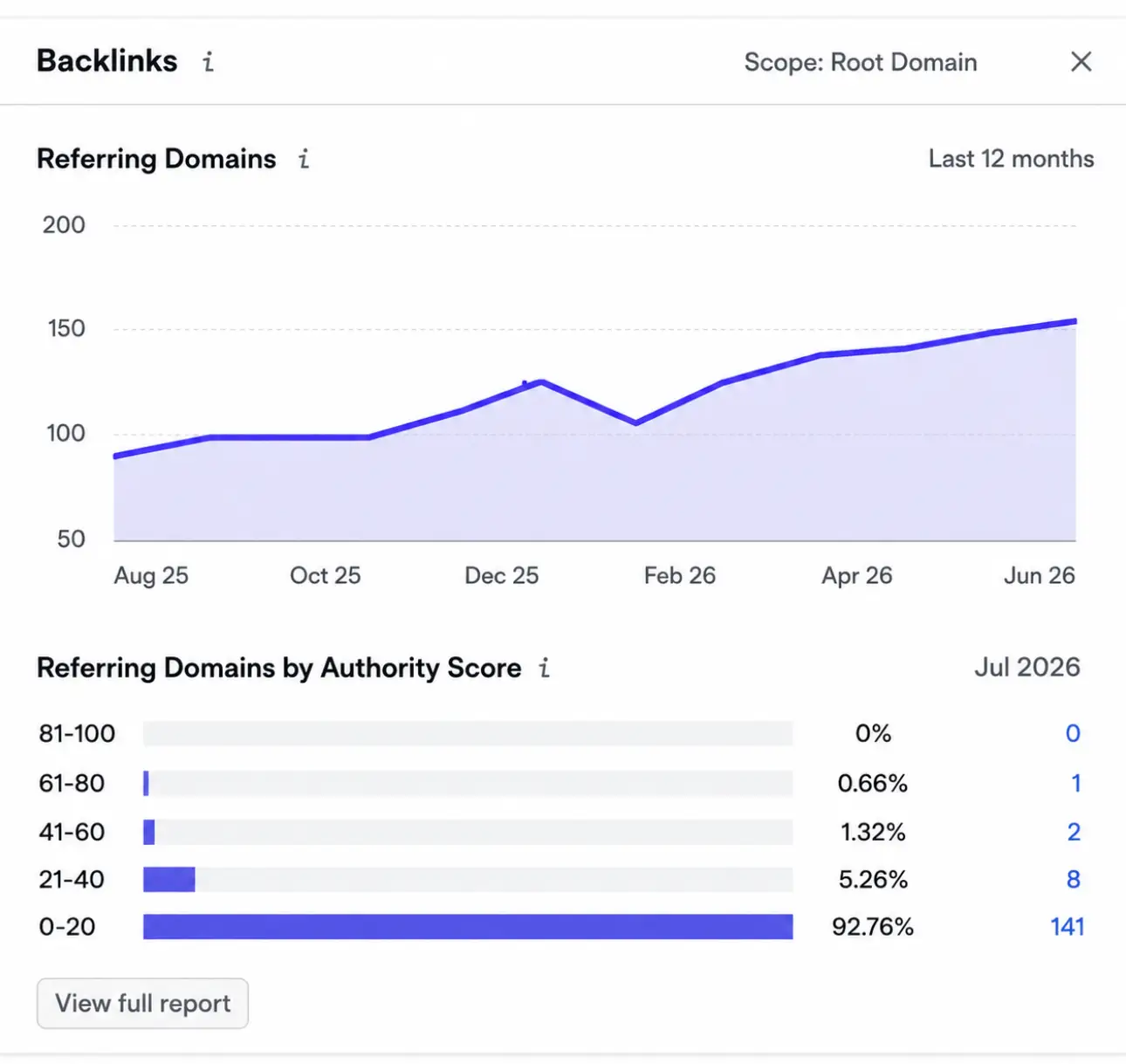
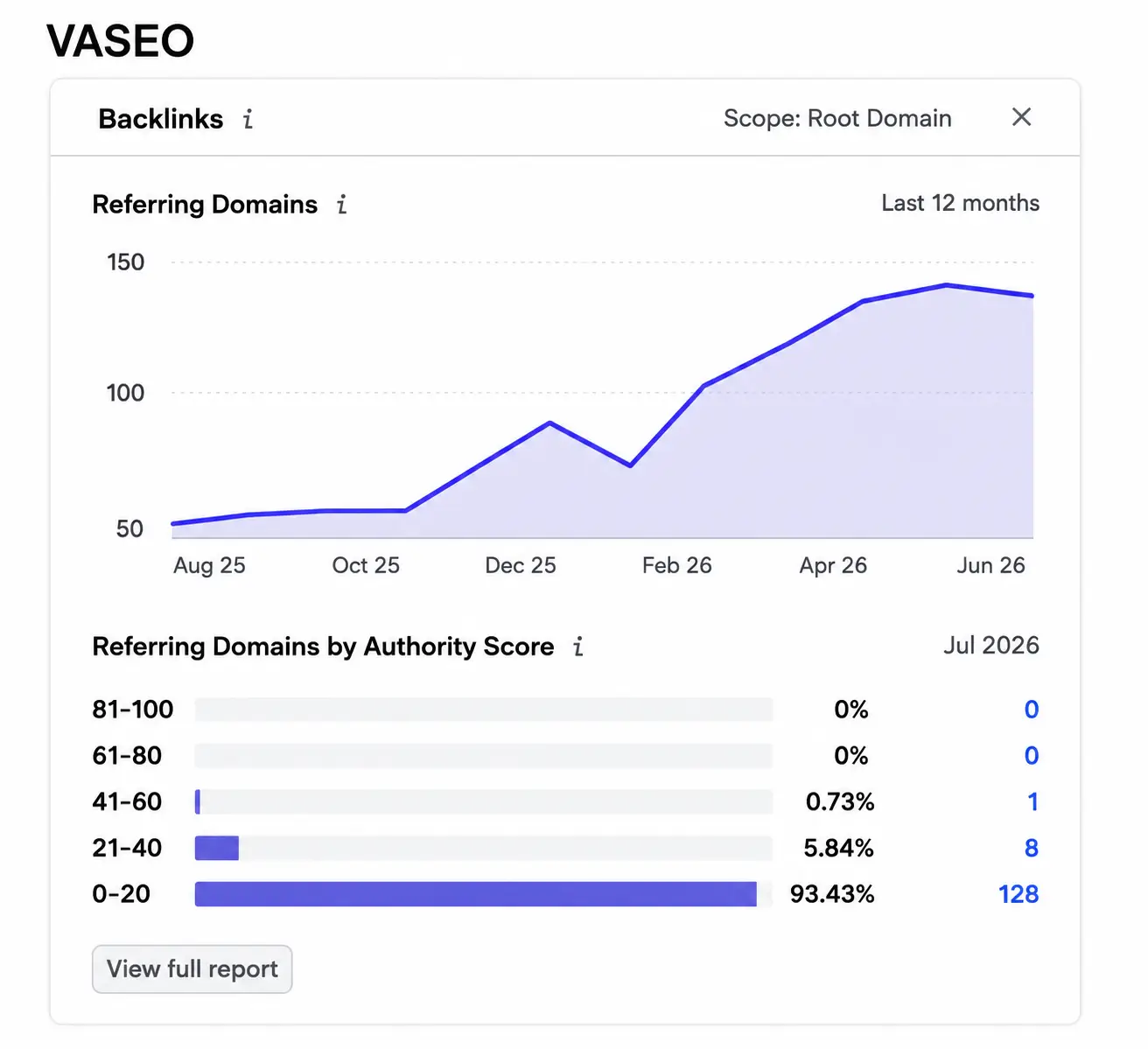
Conclusion: The Slower Path Is the One That Keeps Working
Rankings and AI visibility both move slowly, then all at once, usually once a business stops chasing numbers and starts building the kind of recognition that’s difficult to fake. The published research says referring domains are the strongest backlink-level signal for classic SEO and that unlinked brand mentions are pulling ahead of links as the signal that matters most for GEO. What we’re seeing across our own member network backs that up in practice: the businesses getting this right aren’t necessarily the loudest online. They’re the ones that have earned a genuine seat at the table, one relevant connection at a time.