
Somewhere in your subscriber list right now, there’s a segment that hasn’t opened an email from you in three months. They haven’t formally unsubscribed; most people don’t bother with that step. They’ve simply stopped paying attention and your dashboard is usually the last place to notice.
That quiet drift is what’s forcing a harder conversation inside B2B marketing teams this year. Few leaders would argue that email marketing itself has stopped working. What’s changed is what “working” now requires: cleaner first-party data, tighter authentication and content built to survive an inbox that’s increasingly filtered by AI before a human ever opens it.
2026 hasn’t been a quiet year for this channel. Inbox providers have raised the bar on sender authentication and generative tools have made it cheap to produce polished-looking campaigns at scale, which somewhat ironically has made buyers more suspicious of anything that reads as generic. The teams pulling ahead aren’t the ones sending the most messages; they’re the ones sending the right ones to the right person at a moment that actually matters.
Is Email Still Worth The Investment in 2026
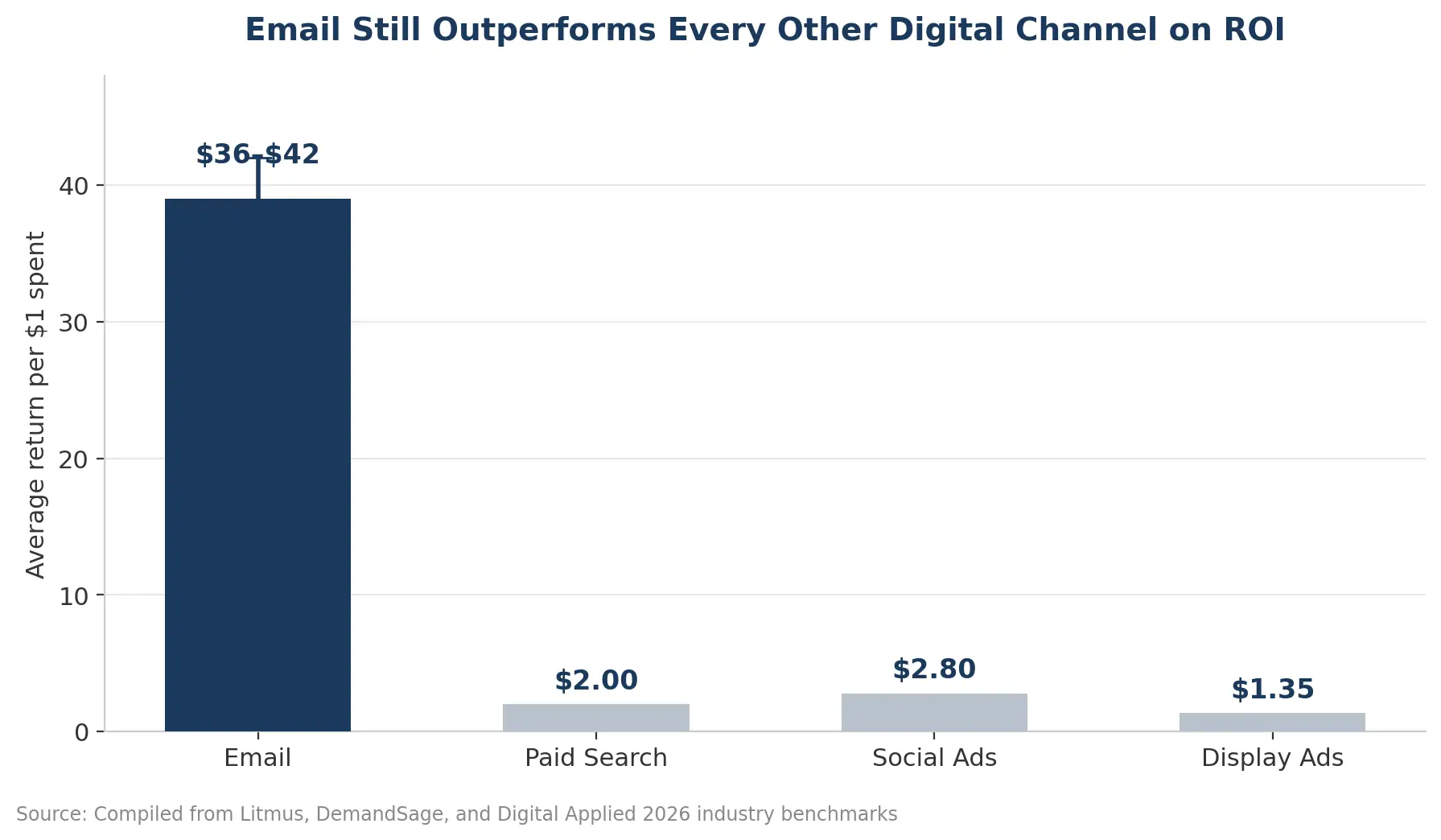
Yes, and by a meaningful margin. Independent benchmarks compiled by research groups including Statista and Litmus consistently put average returns somewhere between $36-$42 for every dollar spent, well ahead of paid search, social advertising and display combined.
That kind of efficiency is difficult to replicate anywhere else in the marketing mix. It’s exactly why the channel keeps earning its place in the plan, even as newer platforms compete for attention.
The question for most teams isn’t whether to keep investing. It’s how to invest well. Below are the email marketing trends actually shaping how B2B teams operate this year and, trend by trend, what Citadel Coworkers does differently with each one for the clients we work with.
Trend 1: Deliverability and Authentication Move From Optional to Mandatory
Gmail and Microsoft now require SPF, DKIM and DMARC alignment for anyone sending more than 5,000 messages a day. Miss it and messages don’t arrive at all, no matter how strong the content is. Deliverability now behaves less like a technical checkbox and more like a trust signal inbox providers evaluate before a subject line is ever read.
Every new client engagement starts with a full authentication and sender-reputation audit, not a strategy deck. We fix domain alignment and list hygiene issues before a single campaign ships, because no amount of clever copy solves a broken inbox placement problem.
Trend 2: First-Party and Zero-Party Data Replace the Old Targeting Playbook
With third-party tracking less reliable, the data customers hand over directly preferences, purchase history, stated interests has become the backbone of good targeting. First-party data comes from how people already interact with a business; zero-party data is what they choose to share directly, through preference centers and onboarding forms.
We build preference centers and progressive profiling directly into a client’s existing signup and onboarding flow, so first-party data starts compounding from day one instead of getting bolted on months later.
Trend 3: Email Automation Graduates From Single Triggers to Full Lifecycle Journeys
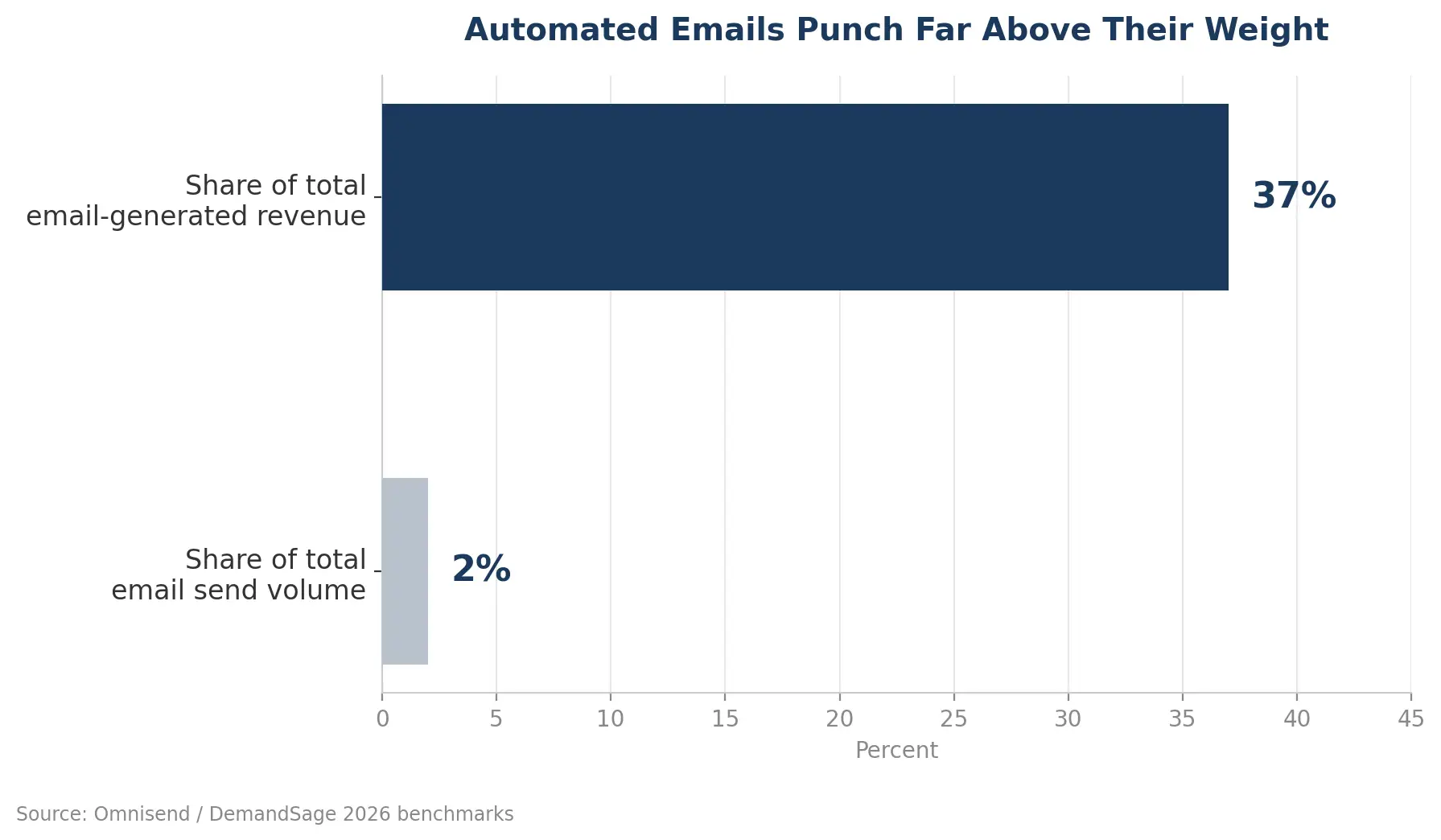
Automation used to mean one thing: a scheduled message that fired after a form submission. Recent data from ecommerce and B2B platforms alike shows automated messages generating well over a third of total email revenue, despite making up only a small fraction of total send volume, often in the low single digits.
Instead of a single welcome email, we map full lifecycle sequences to each client’s actual sales stages: onboarding, education, renewal, win-back, so that the subscribers get a message matched to where they really are, not a generic drip everyone receives in the same order.
Trend 4: Email Personalization Goes Beyond a First Name
For years, personalization meant inserting a first name into a subject line and calling it a day. Modern personalization now draws on browsing behavior, product usage data and stated preferences to change entire content blocks, not just a greeting, often in real time. AI tools have made this achievable for teams without a dedicated data science function.
Some early analyses suggest AI-assisted subject lines can lift open rates meaningfully compared with static, manually written ones, though results vary enough by industry that it’s worth testing on your own list rather than assuming the number will transfer directly.
We build dynamic content blocks tied to each subscriber’s actual behaviour and lifecycle stage, then test them against control groups. That way personalisation gets measured against a baseline, rather than assumed to be working because it looks sophisticated.
Trend 5: Interactive, Mobile-First Design Becomes the Baseline
Roughly half of companies still aren’t designing fully responsive emails , which leaves an obvious opening for the other half. Interactive elements rolls, product carousels, short quizzes turn passive reading into small moments of participation and often double as a way to collect useful preference data at the same time.
Every template we build is tested across major mail clients, screen sizes and dark mode before launch. Where it fits the brand, we look for at least one interactive element per campaign that also feeds data back into segmentation
Trend 6: AI Reshapes Both Sides of the Send Button
Generative tools can now draft a respectable campaign in seconds and plenty of teams have adopted them for exactly that. But research presented at B2B marketing industry events this year found that close to half of buyers say they’re less likely to consider a vendor if an initial outreach message feels synthetic. Buyers can tell and inbox filters are getting better at recognizing generic, mass-produced patterns too.
None of that is an argument for using AI; it’s an argument for using it deliberately with a person who knows the brand’s voice reviewing what goes out before it does. Teams that treat AI as a first draft, not a final one, tend to hold onto the trust that makes this channel worth the investment in the first place.
AI drafts subject lines, tests variations and suggests send times on every account we manage, but a human editor reviews every AI-assisted email before it ships. That review step is non-negotiable, not a nice-to-have we skip when timelines are right.
Putting These Trends Into a Working Plan for 2026
Trends are only useful once they turn into decisions. A realistic plan for the rest of the year usually starts small, in roughly this order:
- Audit authentication and list hygiene first; nothing else matters if messages aren’t landing in the inbox.
- Map one full lifecycle sequence before adding a second one.
- Stand up a preference center, even a basic one, before investing further in personalization.
- Decide in writing where AI is and isn’t allowed to touch a client-facing draft.
None of this requires a full rebuild on day one. Most teams see meaningful movement from tightening two or three of these at once, rather than trying to overhaul everything simultaneously.
Why B2B Teams Are Choosing Citadel Coworkers to Run Their Inbox Strategy
Across every trend above, the same three things show up in how Citadel works: clean, permission-based data; automation mapped to real customer behavior instead of a generic template and a human editorial layer that keeps AI-assisted content sounding like the brand, not like a tool.
Clients tend to stay not because of one standout campaign, but because these fundamentals compound quietly in the background like deliverability, segmentation and message relevance, sustained across a full sales cycle rather than a single send.
For teams weighing whether to build this expertise in-house or bring in focused outside support, that’s usually the conversation worth having first.
Where This Leaves You
That subscriber who stopped opening your emails three months ago isn’t lost because the channel failed them. They’re waiting for a reason to pay attention again one message that actually reflects what they need, sent at a moment that makes sense for their business.
The teams that get this right in 2026 won’t be the ones running the cleverest campaign. They’ll be the ones applying the trends above with enough consistency that trust rebuilds one relevant message at a time. If that’s the direction your team is already heading, a conversation with Citadel Coworkers is a reasonable place to start.