
Your blog post ranks first on Google for the exact question your best customers are asking. Three weeks later, you type that same question into ChatGPT. Your brand isn’t in the answer. A competitor is, quoting a page that ranks below yours.
That gap isn’t a fluke and it won’t close on its own. AI engines are reading the web differently than search engines ever did and the opening seconds of your content now decide whether you get cited or skipped entirely.
This isn’t a hypothetical scenario. It is playing out right now: access ChatGPT, Perplexity, Google’s AI Overviews and Gemini simultaneously, on ordinary business queries: pricing comparisons, “best of” lists and the exact how-to questions your buyers ask you directly. The businesses adapting fastest are treating it as a content problem first, not just a technical one.
This piece looks at why a simple summary block at the top of a page has become one of the highest-leverage moves in content marketing right now, what it has to do with the broader shift happening across search and why the humans behind the words still matter more than the machines reading them.
The Read That AI Engines Never Finish
Search used to reward patience. A strong introduction built context, established trust, then delivered the payoff three paragraphs down. Readers who stuck around got the value and search engines rewarded the time they spent on the page.
Generative engines don’t work that way. ChatGPT, Perplexity, Gemini, Claude and Google’s AI Overviews all scan a page top-down, looking for a clear answer they can lift, rephrase and cite within seconds.
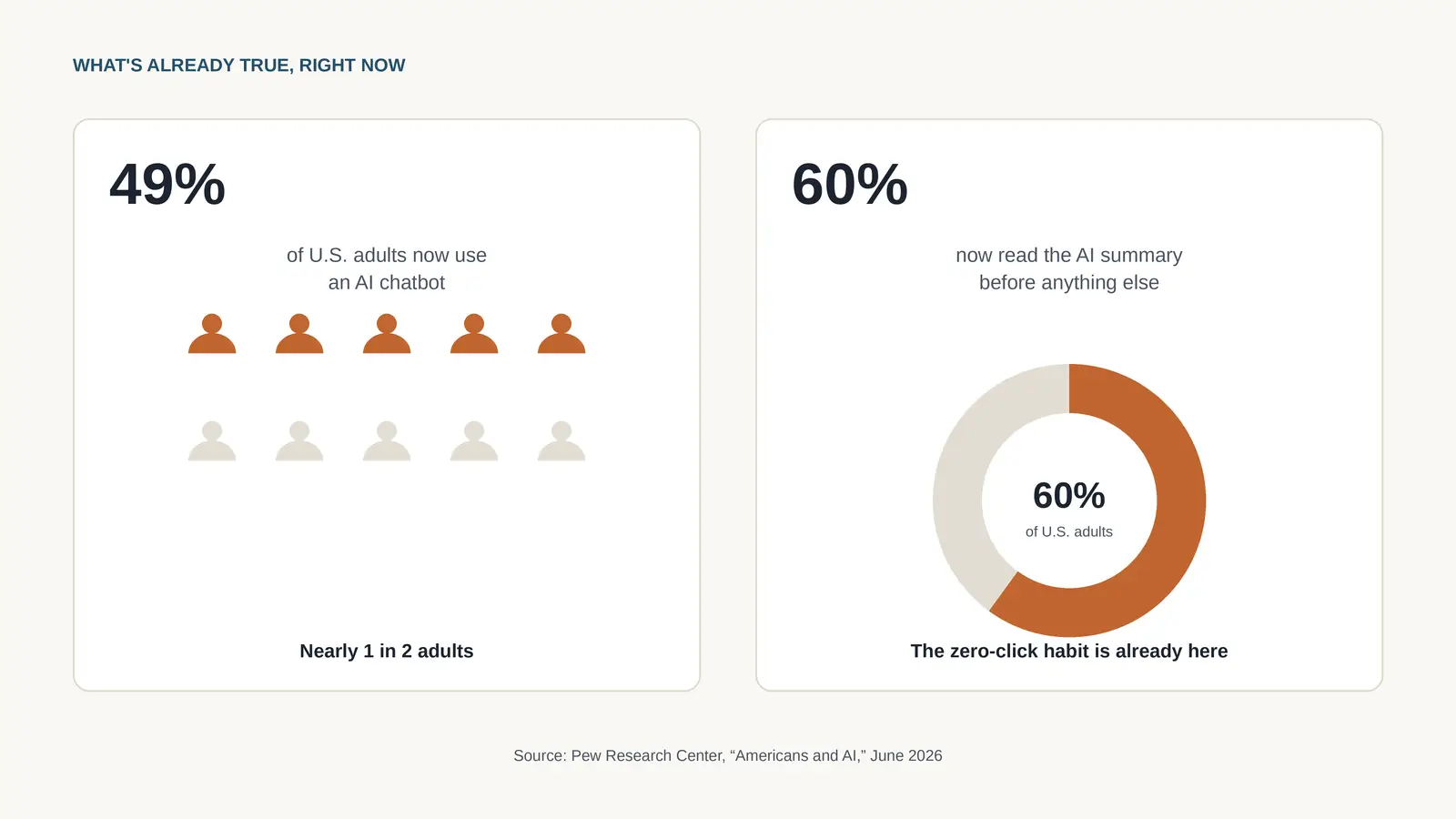
A June 2026 Pew Research Center survey found that nearly half of U.S. adults now use AI chatbots and 60% now read AI-generated summaries at the top of their search results before looking at anything else. Your buyers are already living inside that habit, whether your content has caught up or not.
Being cited well on one of those platforms and invisible on the rest is increasingly common, since each one weighs your website, your reviews and your third-party mentions slightly differently before deciding what to trust.
That’s what people mean when they talk about AI visibility today: not whether your page ranks, but whether an AI system trusts it enough to summarize, quote or recommend. A page can hold position one and still earn zero citations, on the very same query, in the very same week.
What Is a TL;DR and Why Does It Change How AI Reads You
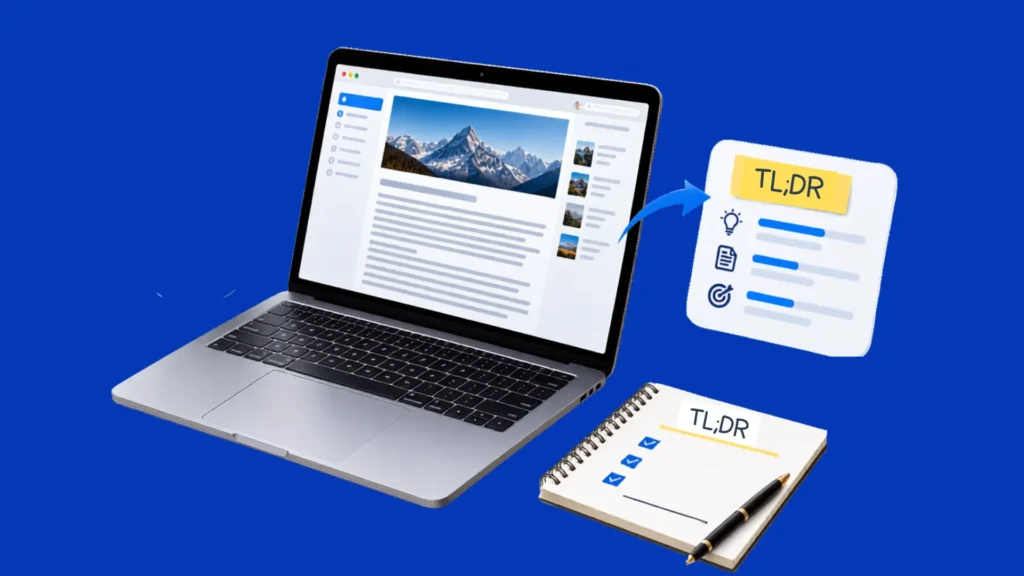
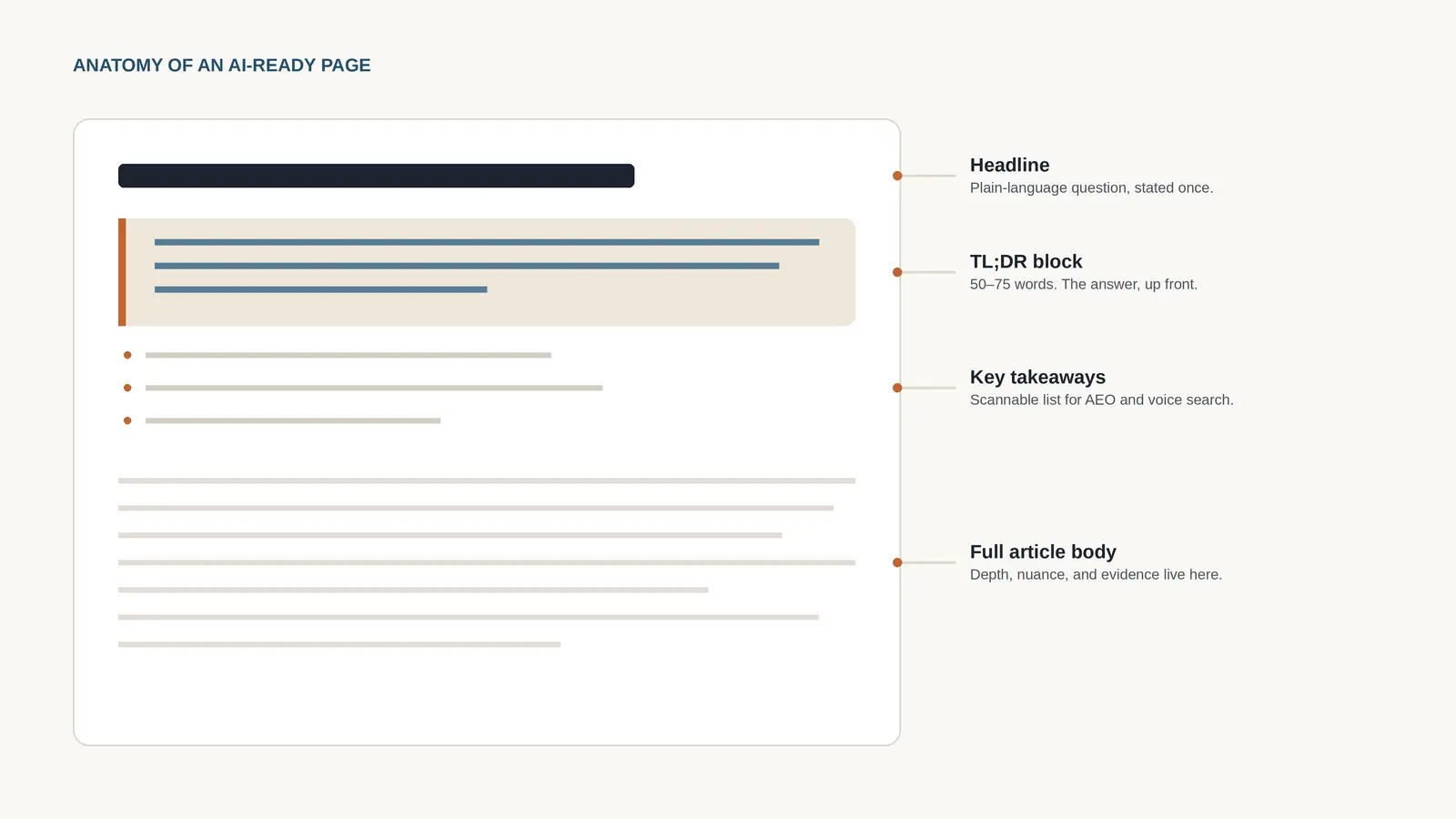
A TL;DR is a two- to three-sentence summary placed directly beneath your headline that states your core answer before a reader or a crawler has to go looking for it. It exists to save a busy person time. It also happens to be exactly what generative systems are built to reward.
That’s the practical edge of Generative Engine Optimization: writing content so an AI model receives a ready-made, accurate answer instead of having to infer one from three paragraphs of throat-clearing. The clearer your opening block, the less guessing the model has to do and the more confidently it can attribute the answer back to you.
It overlaps closely with Answer Engine Optimization, which asks a narrower question: if someone spoke your customer’s exact query into a voice assistant, does your page contain one sentence that answers it directly, with no scrolling required? A well-built TL;DR usually does both jobs at once, for both audiences, in the same few lines.
None of this requires abandoning nuance elsewhere on the page. A TL;DR sits at the top; the rest of your argument, your examples and your depth can still live below it for the reader who wants the full picture, not just the headline conclusion.
How to Build a TL;DR AI Engines Will Actually Cite
Not every summary earns a citation. The ones that do share a handful of traits and getting them right is a small but meaningful content optimization win that you can apply to an existing page this week rather than a future rewrite. Most of the advice circulating right now overcomplicates it. In practice, it comes down to four disciplined habits:
- Keep it to roughly 50-75 words, placed immediately after your H1 or opening line, never buried below an anecdote or a stat-heavy hook.
- Answer the primary question first, in plain language with no scene-setting.
- Pair the narrative summary with a short bulleted “key takeaways” list, so both the zero-click answer and the longer-tail follow-up questions are covered.
- Set it apart visually with a shaded box or a bold ‘In short:” label, so both human skimmers and AI crawlers recognize it on sight.
None of this is about gaming an algorithm. It’s about respecting the reader enough to lead with the answer, which happens to be exactly what AI systems are built to reward too. Do this consistently and you stop hoping an AI system stumbles onto your best insight. You start handling it over on your terms.
Why Citadel Coworkers Treat This as a Human Skill, Not Just a Prompt
It would be easy to read all of this as a purely technical fix: rearrange a few paragraphs, add a shaded box, done. Citadel Coworkers sees it differently, because the writers and marketers we place inside client teams live this shift daily, as a craft decision, not a formatting checkbox.
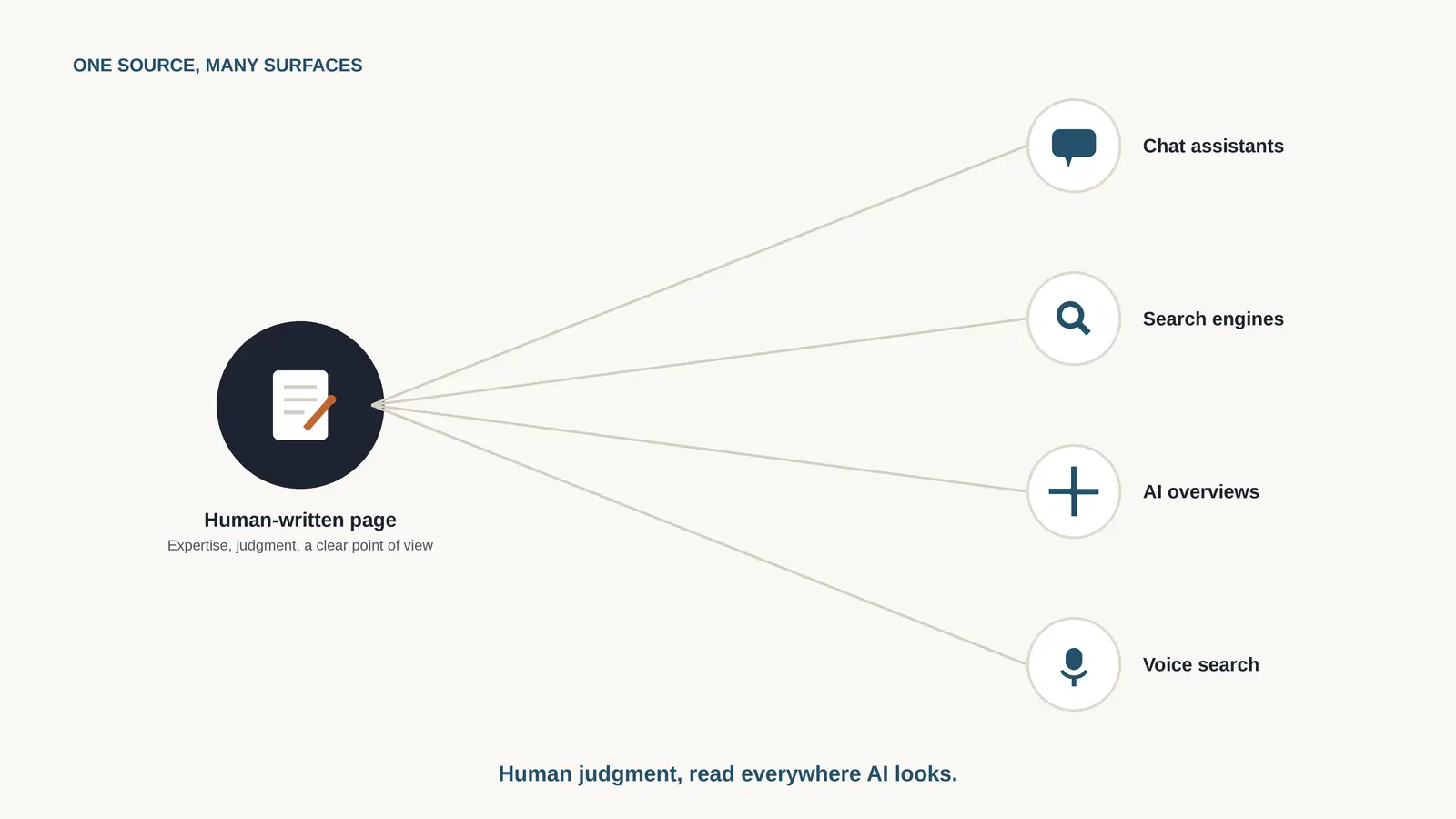
An AI system can summarize a paragraph. It cannot decide which fact matters most to a specific customer, catch the nuance a competitor’s content missed or write with the kind of lived, first-hand expertise that makes a claim worth trusting in the first place. That judgment still comes from a person who understands both the subject and the reader.
The open web is filling up with generic, machine-drafted explainers that say the same thing in the same order. The systems built to filter for genuinely useful content are getting better at noticing the difference and rewarding the pages that don’t read like everyone else’s.
That’s the confident, un-anxious position worth taking here: treat AI as the newest audience reading everything you publish and let skilled people keep deciding what’s actually worth saying to it. The tools change. Good judgment doesn’t.
Why Businesses Choose Citadel Coworkers for AI-Ready Content
Most businesses don’t lack ideas worth publishing. They lack the dedicated writing and marketing capacity to turn those ideas into content that’s structured, current and specific enough to earn AI visibility on a consistent, weekly basis rather than in the occasional lucky post.
Citadel Coworkers fills that gap with vetted content writers, digital marketers and strategists who work as an embedded extension of your team, not a rotating cast of freelancers relearning your brand voice every month. They bring the same editorial discipline to a two sentence TL;DR as they do to a full campaign brief.
That team sits alongside specialists in digital marketing, design and back-office support under one roof, so your content plan connects to the rest of what a growing business needs instead of living in its own silo, disconnected from everything else moving your brand forward.
If you’re weighing whether to build this capability in-house or bring in support that already understands both the writing and the visibility side of it, that’s worth a real conversation before your next content sprint, not an afterthought once a competitor gets cited in your place.
Turning Your Exisiting Library Into AI-CItable Content
You don’t need to rewrite everything you’ve ever published to start seeing movement. The fastest wins usually come from retrofitting posts that already rank respectably but were written for patient human readers only.
- Pull your top-performing pages from Search Console and shortlist the ones with strong rankings but thin or absent AI presence.
- Extract the single most useful conclusion from each page and rewrite it as a tight, upfront summary.
- Add a short bulleted takeaways list beneath it, then republish and request re-indexing.
None of these three steps requires new headcount or new software. They require someone treating your existing content library as an asset worth revisiting, not a backlog to feel vaguely guilty about.
It’s worth setting aside an afternoon to run that audit across your five highest-traffic posts this month. It’s a far smaller lift than a full content overhaul and it’s usually where the clearest, fastest gains show up first.
Getting Found Starts With What You Say First
The gap between ranking first and getting cited isn’t going to close on its own and it won’t close by publishing more content either. It closes one page at a time, starting with the pages already doing the most work for you.
A tighter opening, a clearer answer, a short list of takeaways: none of it requires a rewrite. It requires treating the first hundred words of every page as seriously as you treat the rest of it.
The brands that make that shift now, while most of the web is still writing for patient readers only, will be the ones AI systems keep reaching for when the question is theirs to answer.