
A founder we spoke with recently typed her own company’s core service into a popular AI chatbot, half expecting to see her business appear. Instead, three competitors were named, one after another. She wasn’t. Her website still ranks on page one of Google for that exact phrase. None of that mattered.
That’s the shift already underway. People are no longer just searching; they’re asking, and getting back one confident answer instead of ten blue links to sort through. If a business isn’t part of that answer, it doesn’t lose a ranking position. It loses the entire conversation, quietly, without a single notification telling anyone it happened.
Most businesses only notice once a prospect mentions it in passing, “an AI tool recommended someone else.” By then, the question isn’t whether to pay attention to this shift. It’s how far behind the catch-up already is.
What Are AI Answers And Why Should Your Business Care
AI answers are the direct responses tools like ChatGPT, Perplexity, and Google’s AI Overviews generate when someone asks a question, rather than the familiar list of clickable links. Instead of showing ten websites and letting the person choose, these systems pull from multiple sources, synthesise the information and hand back a single answer, usually naming only a small number of brands, products or experts in the process.
For a business, this changes what “being found” actually means. Ranking well no longer guarantees visibility, because the person asking may never scroll past the answer they’re given.
For B2B service brands especially, this is where the stakes are highest. A buyer comparing vendors for a specialised service- virtual staffing, accounting is exactly the kind of person now asking an AI tool to shortlist options before opening a single browser tab. Being left out of that shortlist doesn’t just cost a click. It costs a conversation that never gets the chance to start.
SEO Still Matters But GEO Is Where the Race Is Being Won
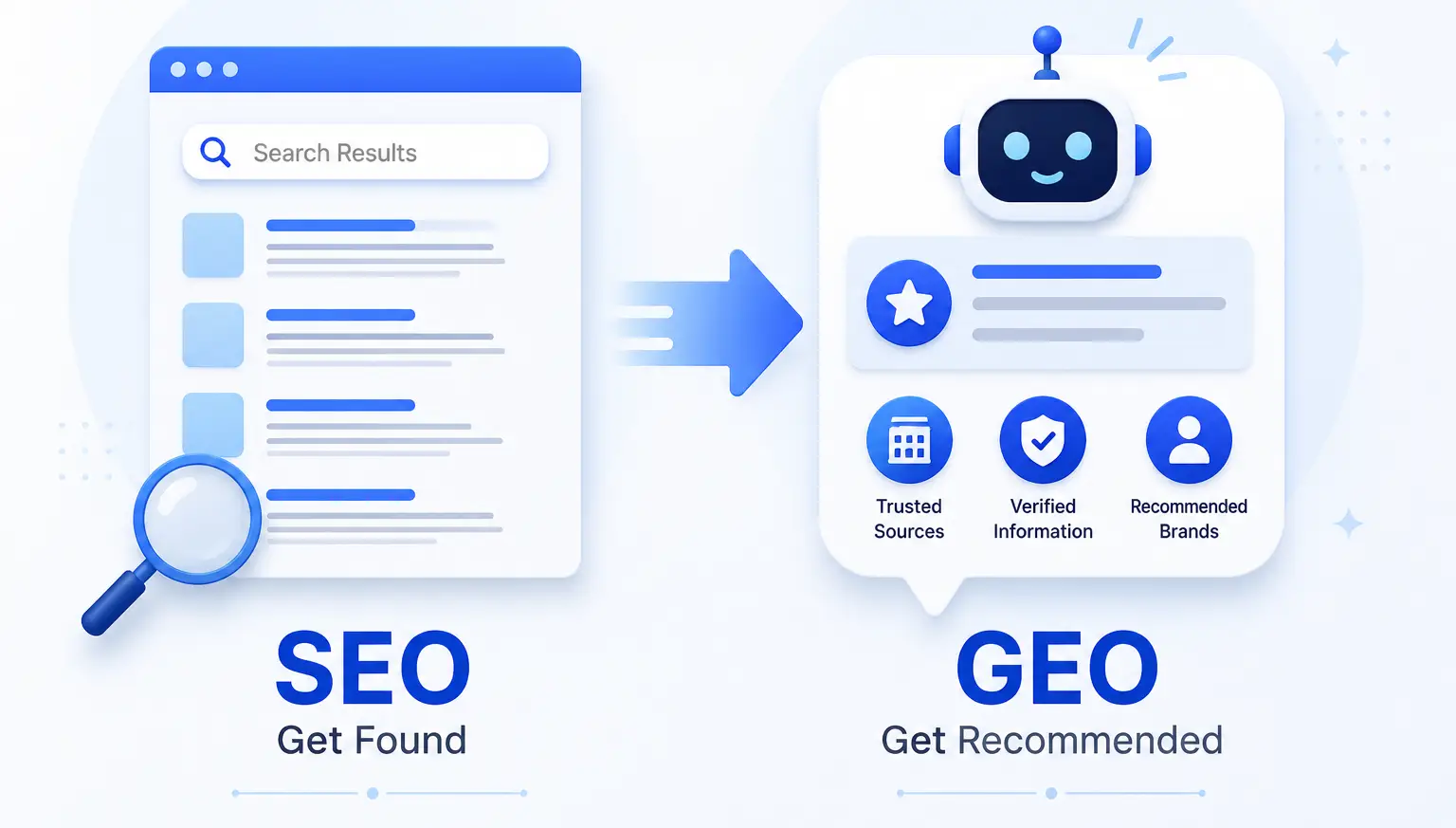
Search engine optimisation hasn’t disappeared and it would be a mistake to treat it that way. But fewer people are opening ten links to compare options themselves and more are simply accepting the answer they’re handed. SEO earns a business a place in that list of ten. It no longer guarantees a place in the one answer that actually gets read.
This is the discipline now known as generative engine optimisation, GEO for short, and it’s where the newer race is playing out. SEO remains the foundation: clean technical structure, solid on-page basics, but GEO is what decides whether an AI system chooses to repeat a business’s name once someone actually asks.
Treating GEO as an afterthought to SEO is how a business ends up asking, a year from now, why a competitor keeps getting mentioned in its place instead. By then, the gap isn’t a keyword gap. It’s a trust gap that took months to build and months more to close.
Why Waiting Costs You the Answer Not Just the Click
AI systems tend to settle on a smaller, steadier set of sources for a given question and once that pattern forms, it becomes noticeably harder for a new name to displace it.
Earning brand citations in AI search is quickly becoming the modern equivalent of ranking first on Google, except the shortlist is shorter and the advantage compounds faster.
There’s a quieter cost to waiting, too. Every month spent undecided about GEO is a month competitors spend building the consistency that earns repeat citations. Catching up later doesn’t just mean matching that work. It means out-pacing a head start that’s already compounding.
If you’re curious where you currently stand, it’s worth typing your own core service into a chatbot today and noting which names come back instead of yours.
How Businesses Earn a Place Inside AI Answers
Getting cited isn’t about gaming an algorithm. It’s about making information easy for a machine to trust and easy for a person to use. A few patterns show up consistently among businesses that manage this well:
Answer the actual question in the first two sentences, not buried in paragraph ten
Keep facts, figures and claims consistent everywhere the business appears online
Use structured data so machines can parse what’s being claimed, not just guess at it
Publish specific, checkable detail instead of vague, promotional language and maintain a presence across the reviews, directories and documentation that models actually draw from .This is the essence of answer engine optimisation: writing with enough clarity and specificity that a system can lift a sentence and use it as the answer, with the business attached to it.
How Progress Gets Tracked Not Just Claimed
None of this is meant to be taken on faith. Keyword rankings and organic visibility are still tracked through familiar tools like SEMrush, because a solid SEO foundation is still what GEO gets built on top of. A rising visibility score there still matters.
What’s changed is what gets checked alongside it. Alongside SEMrush data, the more telling check now is a simple one: when a buyer asks an AI tool the exact question a business answers best, does that business’s name come back and does it keep coming back as the content is refined?
Tracking both side by side, traditional rankings and actual AI citations, is how a business tells the difference between looking good on paper and being the one that actually gets recommended. That means checking not just where a page ranks, but which of its sentences show up, word for word or close to it, inside an AI-generated answer and how often that repeats as new content goes live.
Where AI Stops and Human Judgment Takes Over
AI systems are excellent at surfacing information, but they have no way of knowing what makes one business worth citing over another. A person still has to decide which claim can be defended, which detail is genuinely differentiated, and which sentence deserves to be quoted back.
Get that judgment wrong, and even a technically flawless page won’t earn its place in the answer. This is precisely why treating AI answer visibility as a writing exercise, rather than a strategic one, tends to fail. The businesses winning this space aren’t the ones publishing the most. They’re the ones whose people understood what was worth saying, and said it plainly.
Why Businesses Are Turning to Citadel Coworkers for This Shift
This is the gap Citadel Coworkers was built to close. Rather than treating AI visibility as a bolt-on service, the team embeds dedicated content and marketing specialists directly inside a client’s day-to-day operations, people who understand how to write for a human reader and a language model at the same time.
This isn’t guesswork for the team. Each account gets tracked and adjusted the moment a platform changes how it selects sources, rather than being reacted to months after the fact.
A virtual content specialist from Citadel Coworkers doesn’t just produce blog posts; they structure a business’s expertise into the specific, consistent, checkable form that AI systems are built to trust. Paired with the technical groundwork, schema, structured data, SEMrush-tracked rankings, and consistency checks across a brand’s footprint, this turns being cited by AI from a hope into a repeatable process.
How This Plays Out for a Growing Business
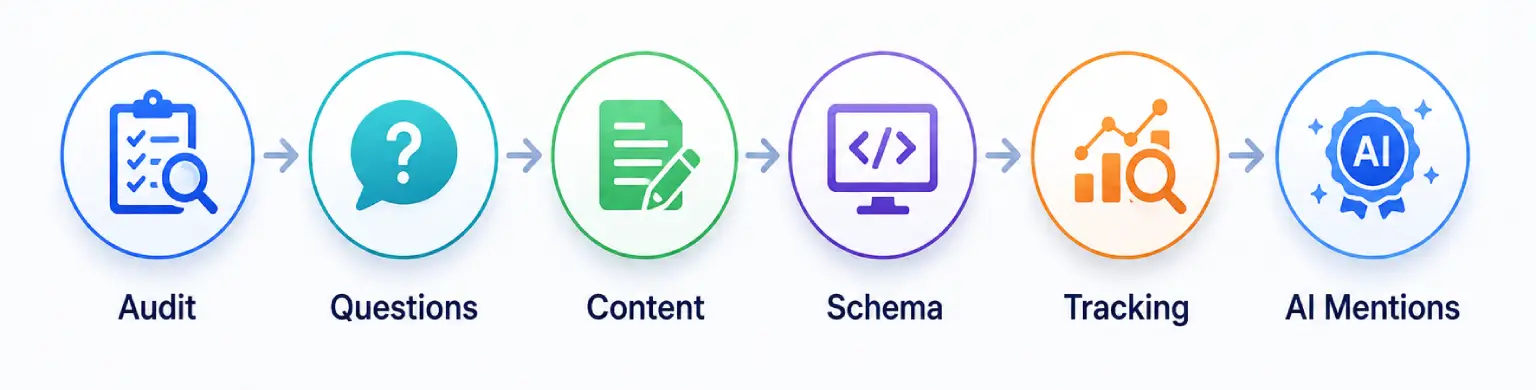
For a business working with Citadel Coworkers, this typically means a small, dedicated team taking ownership of the full picture: identifying the exact questions buyers are already asking AI tools, rebuilding content around clear and quotable answers, and tightening the technical detail that lets those answers get picked up.
The work follows a steady rhythm rather than a one-time push: an initial audit of how a brand currently appears, or doesn’t, across AI tools, a content plan built around real buyer questions, and ongoing tracking, SEMrush data included, as answers and citations shift over time.
Worth exploring, if this sounds like a gap in your own business: ask Citadel Coworkers for a short read on how your brand currently shows up, or doesn’t, across AI tools, set against where competitors are already being named.
The Businesses That Win This Decade Won’t Just Rank
Search rankings will keep mattering for a while yet, but they’re no longer the whole game. The businesses that matter five years from now will be the ones an AI system reaches for by name, without being asked twice. That shift is already happening quietly, one answer at a time.
The founder from the opening of this piece has since started rebuilding her content around exactly this problem: SEO groundwork and GEO strategy together, not one instead of the other. Whether your business does the same before or after a competitor gets named in your place is, at this point, entirely a choice, and one worth making while there’s still a shortlist to join.