

A business is judged less by what it says about itself and more by how it’s described everywhere else on the internet in articles, reviews and now inside AI-generated answers.
When someone asks an AI assistant to recommend a provider, compare options or explain who’s worth considering, that assistant is drawing on sources far beyond a company’s own website sources most marketing teams have never directly touched.
That shift is what’s made earned coverage and public relations essential to how a brand shows up in AI-generated answers. AI platforms don’t take a company’s word for its own expertise. They check whether independent sources back it up.
This piece looks at why that third-party evidence matters, how earned media, expert commentary and consistent brand information feed the sources AI systems already trust and what a practical strategy looks like for brands that want to be part of the answer, not just the search results.
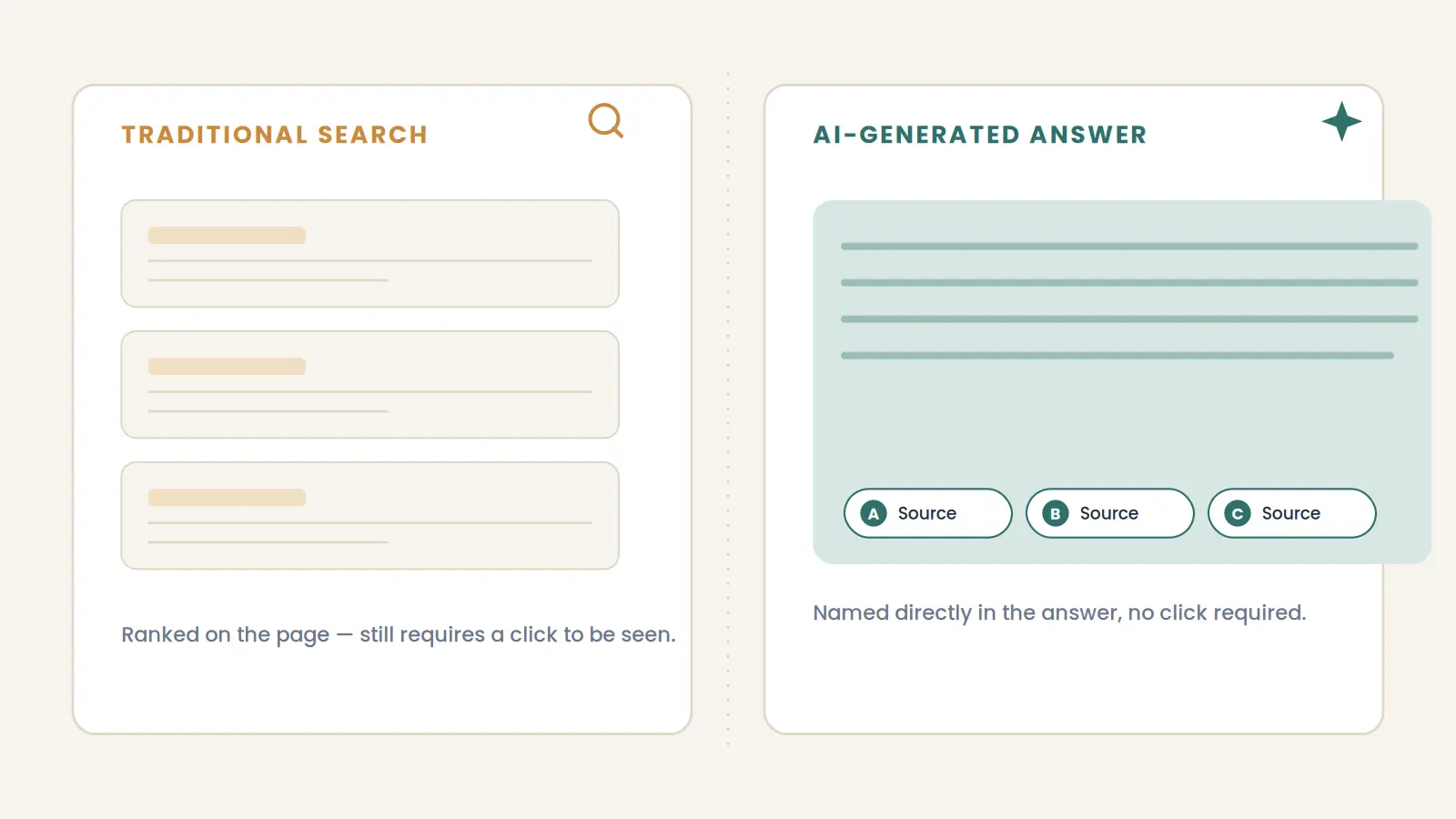
The Results Page Isn’t Where the Decision Happens Anymore
For years, the goal of most marketing teams was straightforward: rank on page one, earn the click, convert the visitor. That funnel assumed a person would read several links, compare options and land somewhere.
AI-generated answers remove several of those steps. A buyer asks a direct question, receives a synthesized response and often never opens a second tab. If a brand isn’t named inside that response, it may as well not exist for that particular search.
This shift doesn’t make traditional SEO pointless. It changes what “being found” now requires, because being crawled and indexed is no longer enough to be recommended.
Plenty of buyers still click through to compare pricing pages or read a case study before signing anything. But the shortlist itself the small set of names worth that extra click- is increasingly decided somewhere else first, inside a single AI-generated answer the buyer never has to question.
Why Ranking Well Doesn’t Guarantee an AI Mention
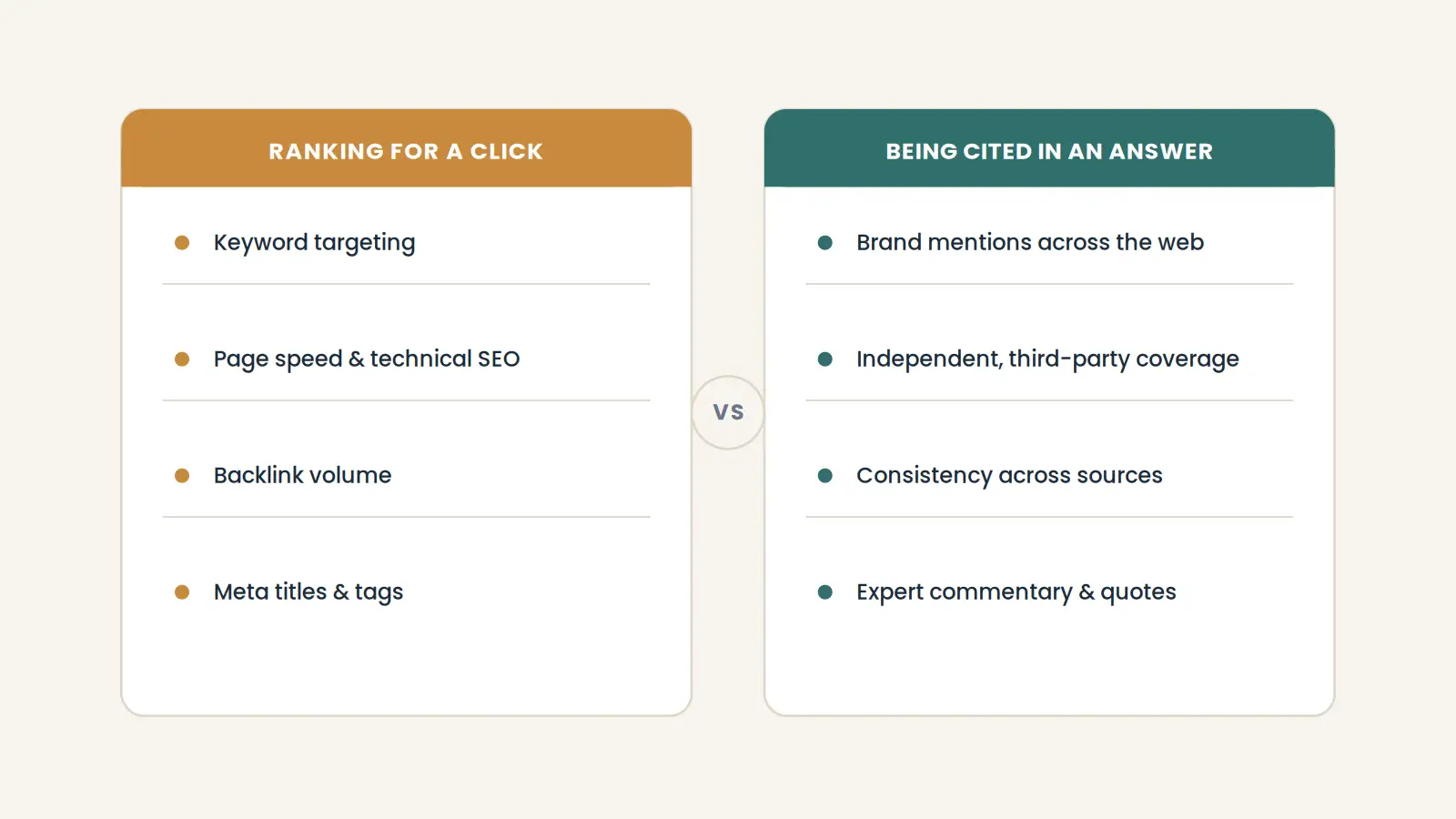
Search engines and AI models don’t judge credibility the same way. A page can rank respectably through solid on-site work while still going unmentioned by an AI assistant, because these systems weigh something else: how often and how consistently a brand is discussed by sources it didn’t write itself.
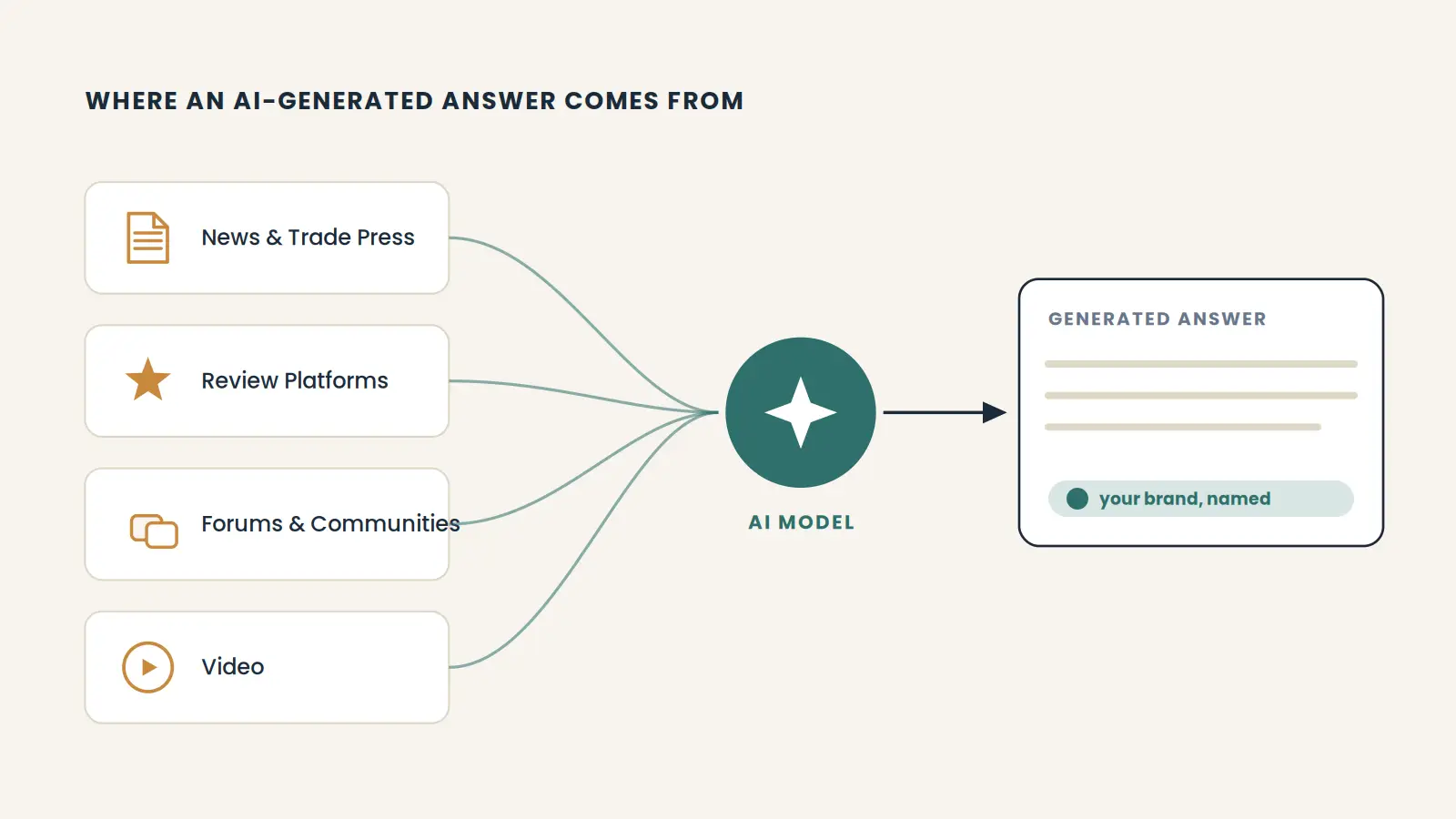
An AI model forming an answer isn’t only reading a company’s homepage. It’s checking whether other credible sources publications, review platforms, industry commentary, video describe that business the same way it describes itself.
This is the gap earned media and outside coverage are built to close. They supply the third-party evidence that a brand’s own website, however well optimized, cannot provide on its own.
How Digital PR Actually Earns You a Place in AI Answers
Earned media has always done two jobs: build reputation and generate links. Its role now stretches further. When a brand is named consistently across credible, independent sources, AI systems have more signals to draw on when deciding who to mention and how to describe them.
An Ahrefs study covering roughly 75,000 brands, published in December 2025, found that brand mentions across the open web and on platforms like YouTube correlated far more strongly with AI-generated brand mentions than backlink volume or the sheer amount of content a site published. Being talked about elsewhere mattered more than publishing already trusted.
At Citadel Coworkers , this is usually where client conversations start not with a content calendar but with an honest look at how a brand currently appears or doesn’t across the sources AI platforms already trust.
If you’re curious where your own brand currently stands, a quick exercise helps: ask an AI assistant the exact question a prospective client would ask and note who gets named in the answer.
The Building Blocks of an AI-Ready Earned Media Strategy
A handful of practices consistently strengthen how AI systems perceive and cite a brand:
- Expert commentary placed in trade publications and industry roundups, tied to a named spokesperson
- Original data or research that gives journalists a genuine reason to cite the brand directly
- Consistent business information: name, description, leadership, service area across directories and profiles
- Comparison and “best of” placements in the kind of articles AI systems already reference
- Active, recent reviews on the platforms most relevant to the industry
None of these replace a strong website. They give that website something to stand on.
Why Consistency Matters as Much as Coverage
Getting mentioned once is easy compared to getting described the same way everywhere. AI systems are, at their core, trying to work out what a business actually does, who it serves and whether that story holds together across the web.
A brand whose name, service descriptions and leadership details shift slightly from one directory, profile or article to the next makes that job harder. A brand that stays consistent in its own words and in how others describe it gives an AI model far less room for doubt.
Backlinks still play a part in this picture too, though quality now counts for more than volume. A handful of mentions on relevant, credible sites tends to do more work than a long list of low-value links ever could.
Generative Engine Optimization And How Is It Different From Traditional SEO
Generative Engine Optimization is the practice of structuring content, coverage and brand signals so AI systems can accurately extract, summarize and credit a business inside a generated answer. Traditional SEO optimizes for a position on a results page. This work optimizes for something else: how a brand gets described when no results page appears at all.
The two disciplines overlap more than they compete. A technically sound website still matters. It simply isn’t the whole picture anymore.
Where the Algorithm Stops And Human Judgment Takes Over
It would be easy to treat this shift as a purely technical problem: feed the right signals to the right systems and wait for results. That view misses something experienced communicators already understand well.
AI models can summarize what already exists. They cannot decide that a brand deserves a feature in a trade publication, build the relationship that gets a founder quoted in a well-timed story or judge which angle a journalist will actually care about this month. Those remain unmistakably human calls.
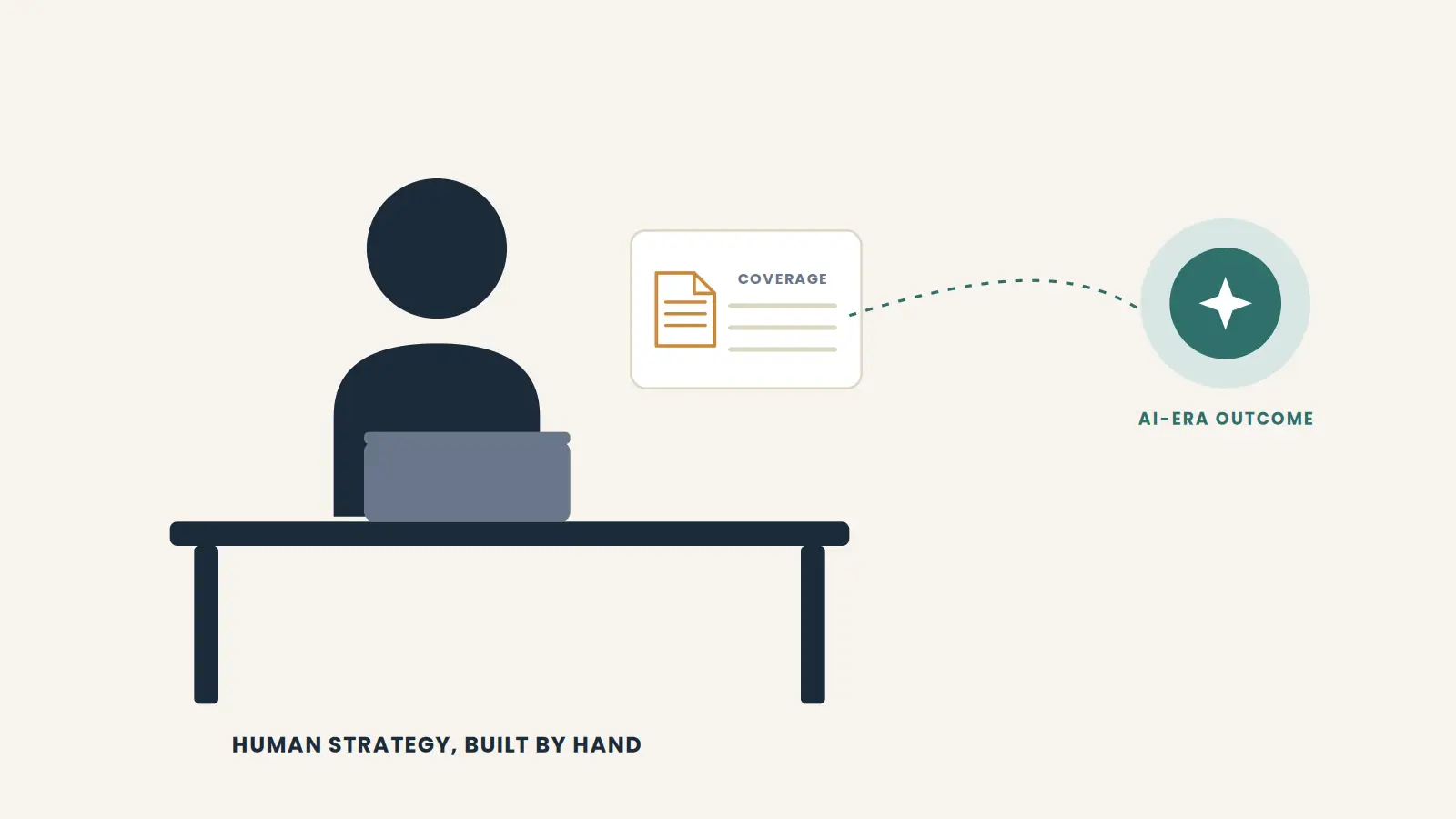
This is also where AI SEO work and earned media stop being separate line items. The brands getting cited most consistently tend to be the ones where a person, not a tool, is doing the pitching, the relationship-building and the editorial judgment that earns a mention worth having.
Treating that as a business advantage, rather than a gap AI will eventually close on its own, is the more useful stance for any team serious about how it’s represented.
The tools will keep improving. The need for someone who understands a specific industry, knows which journalist covers what and can tell a story worth repeating isn’t going anywhere.
Why Businesses Choose Citadel Coworkers to Build Their Presence in AI Search
Most agencies can produce content. Fewer can connect that content to the credibility signals AI systems actually weigh.
Citadel Coworkers works from the same premise this piece has argued throughout: a brand’s own claims about itself carry limited weight until independent sources back them up.
That belief shapes how engagements are structured, starting with a clear picture of where a brand already stands, then building outward through earned coverage, structured content and consistent information rather than isolated campaigns.
Clients tend to notice two things early on: the strategy is grounded in what’s actually happening across their industry’s AI-generated answers , not generic best practices and the reporting tracks movement in mentions and citations, not rankings alone.
If your team is weighing where to put next quarter’s PR and content budget, it’s worth exploring what a focused review of your current standing in AI-generated answers would reveal before that decision gets made.
The Brands Worth Talking About Get Talked About
The point worth carrying forward is the one this piece opened with: a business is judged by how it’s described elsewhere, not just by what it says about itself. An AI system forming an answer is only ever as generous as the public record it can find.
That record doesn’t build itself and it doesn’t build quickly. It builds deliberately, one credible mention at a time. The businesses that start now won’t just be visible in search results. They’ll be part of the answer.