

Two resumes sit open on your screen. One belongs to a writer with a decade of carefully crafted long-form work, every sentence shaped by hand. The other belongs to someone with fewer years but a comfortable fluency in the tools that now draft, summarise and repurpose content in minutes. Both are capable. Only one fits the way your business will actually operate over the next few years. The decision looks minor. It rarely is.
The question of who creates your content has quietly turned into a question about how your business intends to think and move. The voice of your brand, the speed of your output and the trust you build with readers all trace back to this single choice. And the dividing line is no longer strong writer versus weak writer. It’s whether the person you bring on truly understands the technology reshaping their own profession.
Why This Single Hiring Decision Now Shapes Your Brand’s Future
Content is rarely a one-off task. It compounds. A blog published this quarter can still pull in search traffic long after it goes live. A brand voice set early becomes the template every future piece is measured against. So when you decide to hire a content marketer, you aren’t filling a seat; you’re choosing the engine behind a long-term asset.
Here’s the tension most business owners feel but struggle to name. A purely traditional writer may produce excellent work, slowly, at a cost that climbs with every project. A writer who leans only on automation may move quickly but produce content that reads like everyone else’s. Neither extreme serves a brand that wants to sound distinct and stay efficient.
The real opportunity sits between those two poles. The most valuable hires today treat AI as an instrument, not a substitute for thinking. They use it to remove friction, then apply human judgment exactly where it counts. That blend is what protects your brand from sounding generic while keeping your output sustainable.
What Genuinely Changes When AI Enters the Writing Process
It helps to be precise about what AI does well and where it quietly fails. Used skillfully, it accelerates research, drafts outlines and offers a dozen angles in the time a person might find one. It clears the blank-page problem that slows even seasoned writers, and it handles the repetitive scaffolding that used to eat hours.
What it cannot do is carry accountability. AI does not understand your customer’s hesitation before a purchase. It cannot sit in a strategy meeting and sense which message will land with a sceptical CFO. It has no stake in whether your brand earns trust or loses it. It will state something confidently, whether or not it is true, which means someone still has to know the difference.
This is where the fear-of-AI narrative misses the point. The threat was never the tool. The risk is hiring someone who either refuses to use it or leans on it so heavily that nothing original survives. A skilled professional knows the boundary between the two, and that discernment is the actual thing you’re paying for. Treating AI as a confident first draft to be challenged, never a final answer to be trusted, is the habit that separates a strong hire from a risky one.
The Capabilities That Separate a Modern Writer From an Outdated One
If you’re weighing candidates, look past polish and probe for adaptability. The strongest hires tend to share a recognisable set of traits:
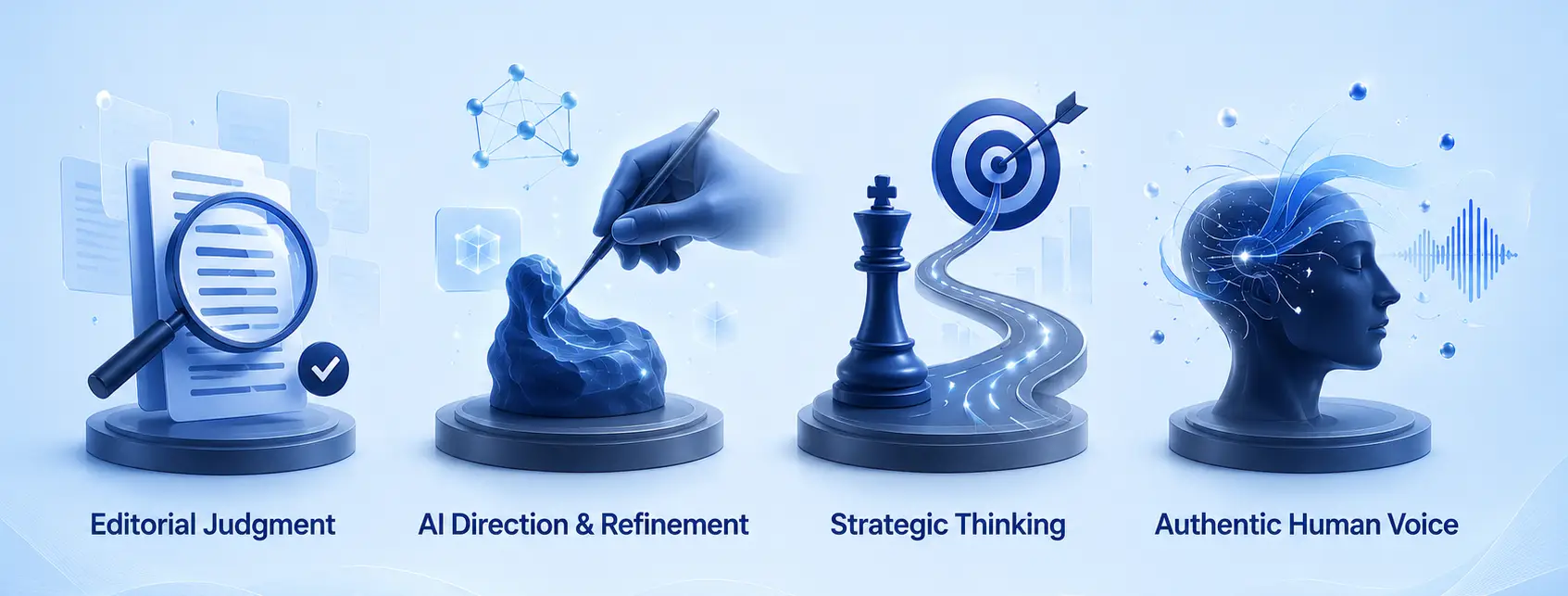
- Editorial judgment over output volume. They can tell you why a paragraph stays or goes, not just how fast they can produce ten of them.
- Comfort directing AI, not deferring to it. They prompt, refine and then rewrite heavily, treating a draft as raw clay, never a finished sculpture.
- Strategic awareness. They connect each piece to a business goal, whether that’s ranking for a term or moving a hesitant lead closer to a decision.
- A distinct human voice. They write things a machine wouldn’t, because they’ve genuinely understood your audience.
A capable content marketing specialist will demonstrate all four without being asked. They’ll show you where automation saved time and where they deliberately overrode it. That balance is rare, and it tends to be worth more than raw years on a resume. Experience matters, but adaptability is what keeps experience relevant.
Can AI Replace a Skilled Content Marketer
Short answer: no and the reason is worth stating plainly. AI can replace tasks, not responsibility. It can generate a draft, but it cannot own the outcome, defend a creative choice or adjust strategy when results shift. A human marketer interprets data, reads context and makes the calls that protect a brand’s reputation.
Think of it this way. An AI content writer is an extraordinarily fast assistant with no memory of your business and no accountability for its mistakes. The person who directs the assistant who edits, fact-checks and shapes the narrative is the one delivering the value. The tool amplifies talent. It does not manufacture it.
If you’ve been wondering whether to lean fully into automation, it’s worth pausing here. The brands that win aren’t the ones publishing the most. They’re the ones publishing work that sounds like a person who knows what they’re talking about, and who readers and increasingly, AI-powered search engines recognise as credible.
A Practical Filter for Choosing the Right Hire
When you sit down to assess a candidate, a few honest questions cut through an impressive portfolio quickly:
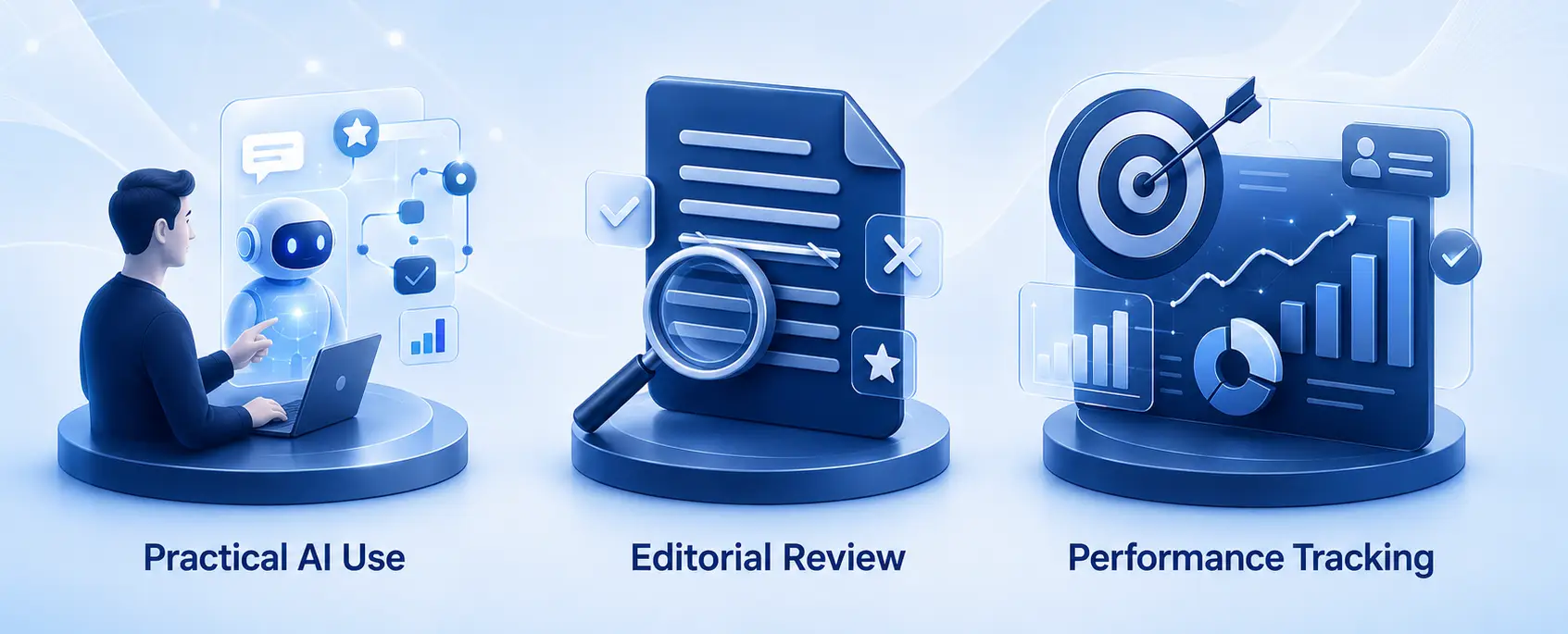
- Ask how they’d use AI on a real project and listen for nuance, not buzzwords.
- Ask them to critique a piece of AI-generated copy. Their edits reveal their judgment more than their writing samples do.
- Ask how they measure whether a piece of content actually worked.
For many growing businesses, the smarter move isn’t an internal hire at all. The decision to outsource content marketing gives you access to people who already work this way, fluent in modern tools, disciplined about quality and accountable for results, without the overhead of building a team from scratch. It’s worth exploring what that flexibility could free up across the rest of your business.
This is where the model you choose matters as much as the individual. A single freelancer can be brilliant on a good week and overwhelmed on a bad one. A structured partner brings consistency, oversight and a standard that doesn’t waver when one person is unavailable. For a business that depends on a steady stream of credible content, that reliability is often the deciding factor more than any single writer’s talent.
Why Growing Businesses Trust Citadel Coworkers
The strongest content teams aren’t defined by whether they use AI they’re defined by how thoughtfully they use it. That principle sits at the heart of how Citadel Coworkers approaches every engagement. The goal is never speed for its own sake. It’s clarity, credibility and content that hold up under scrutiny.
What sets the approach apart is balance. Writers are encouraged to use modern tools to handle the repetitive groundwork, then spend their real energy on the parts that only a human can do well: strategy, voice and the subtle decisions that make a brand sound like itself. Clients get the efficiency of technology and the judgment of experienced professionals in the same package, rather than being forced to choose between the two.
Just as importantly, accountability stays human. When you work with CWW, there’s a real person responsible for understanding your goals, interpreting your audience and standing behind the work. That’s the difference between content that simply exists and content that earns attention. It’s also what makes the relationship feel like an extension of your team rather than a vendor you have to manage.
If you’re rethinking how your brand produces content, it may be worth seeing how a hybrid human-and-AI approach feels in practice before committing to any single path.
The Choice That Quietly Defines Your Next Few Years
Come back to those two resumes. The decision was never really about who writes faster or who has more years behind them. It was about which mindset you want shaping your brand, as the ground keeps shifting beneath it.
The writer who resists AI will slowly fall behind in speed and cost. The one who hides behind it will blur into the noise everyone else is already making. The hire worth making is the one who is fluent in the tools, but unwilling to let them think on their behalf.
That balance won’t stay rare forever. The businesses that recognise it now will build a content advantage that compounds quietly, piece by piece, while their competitors are still arguing about whether the machines are coming. The sharper question isn’t whether AI belongs in your content. It’s whether the person steering it knows exactly when to listen to it and when not to. Get that one decision right and almost everything downstream becomes easier.