
Key Takeaways
- LinkedIn rebuilt its feed so posts are now matched by meaning rather than keywords.
- Saves, dwell time and intelligent comments matter more than likes or post volume.
- Engagement pods, comment automation, one-word comment prompts and recycled thought leadership are being pushed down.
- AI is an excellent tool for drafting, formatting and error-checking, but judgment and accountability still decide whether a post earns trust.
- Choose two or three themes, publish original insight and answer every genuine comment.
Falling reach is one of the most common complaints on LinkedIn this year. Founders, executives and company pages publish steadily, keep the same rhythm and still watch their posts stall.
The difference in 2026 is not your effort. LinkedIn has rebuilt how the feed finds and ranks posts in March. What this means for your posts is that the reach depends less on how many people follow you and more on whether the system believes a post matters to the person reading it.
LinkedIn also began pushing down the shortcuts that once inflated numbers: engagement pods, comment automation and recycled thought leadership. This guide explains what changed, what the feed now rewards and where AI helps or quietly hurts, with practical steps you can use this week.
What Is the LinkedIn Algorithm
The LinkedIn algorithm is the ranking system that decides which posts appear in a member’s feed, and in what order. In 2026, it retrieves posts matching that person’s interests, predicts which ones they will read, save or discuss, then orders them accordingly. Quality filters run first; relevance and attention decide the rest.
How do you increase reach on LinkedIn? Publish specific, experience-based posts on two or three themes, earn saves and thoughtful comments and keep links out of the post body when reach is the goal.
What Changed on LinkedIn in 2026 and Why Your Reach Felt It
LinkedIn Engineering published details of a rebuilt feed in March. As Search Engine Land reported, LinkedIn replaced several separate discovery systems with one retrieval model powered by large language models. A transformer-based ranker then studies patterns across each member’s past interactions, including likes, comments and dwell time.
The result is precision, not punishment. LinkedIn can now link related topics even when the wording differs, so your post competes inside each reader’s interests rather than across a network of roughly 1.3 billion members. Reach feels lower because it is aimed better.
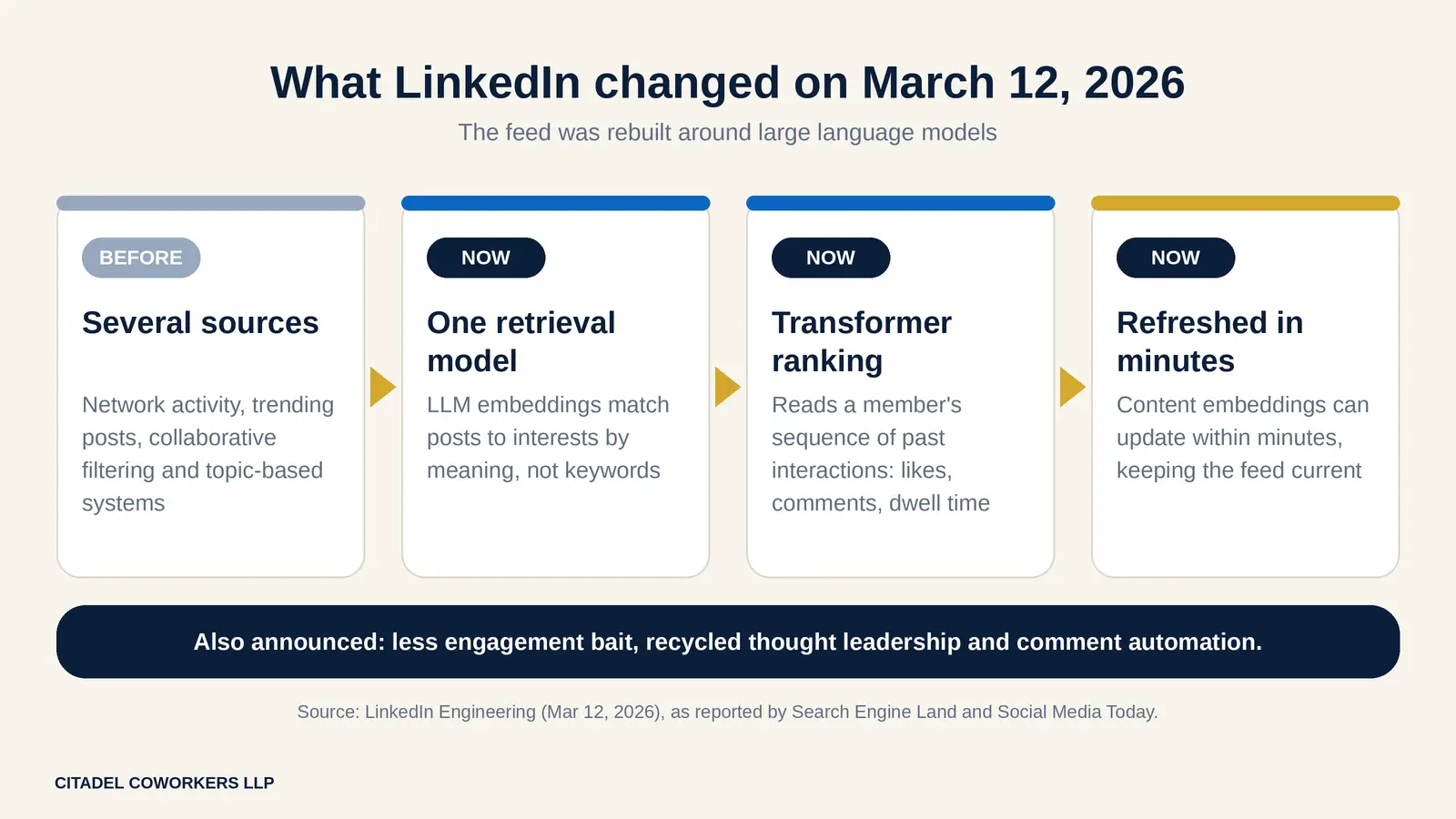
An authenticity push came with the rebuild. LinkedIn said it is acting against comment-automation tools, browser extensions and engagement pods and showing less of what games the system: prompts begging for a one-word comment, unrelated videos paired with text and recycled thought leadership posts with little to no substance.
Meaning now beats mechanics. Hoootsuite’s 2026 update notes that hashtag stuffing matters less than clarity: name the audience, state the problem and make the takeaway obvious. Saves and thoughtful comments signal that a post was worth the reader’s time.
Relevance has also overtaken recency. LinkedIn confirmed in mid-2025 that it would show older posts when they matched a member’s interests, weighing past engagement, the relationship with the author and the author’s expertise on the topic.
New members are covered too. LinkedIn is testing an Interest Picker at sign-up, so clearly themed content can reach them from day one.
How a Post Travels From Draft to Feed
Here is the short version of the LinkedIn algorithm 2026 teams need to plan around.
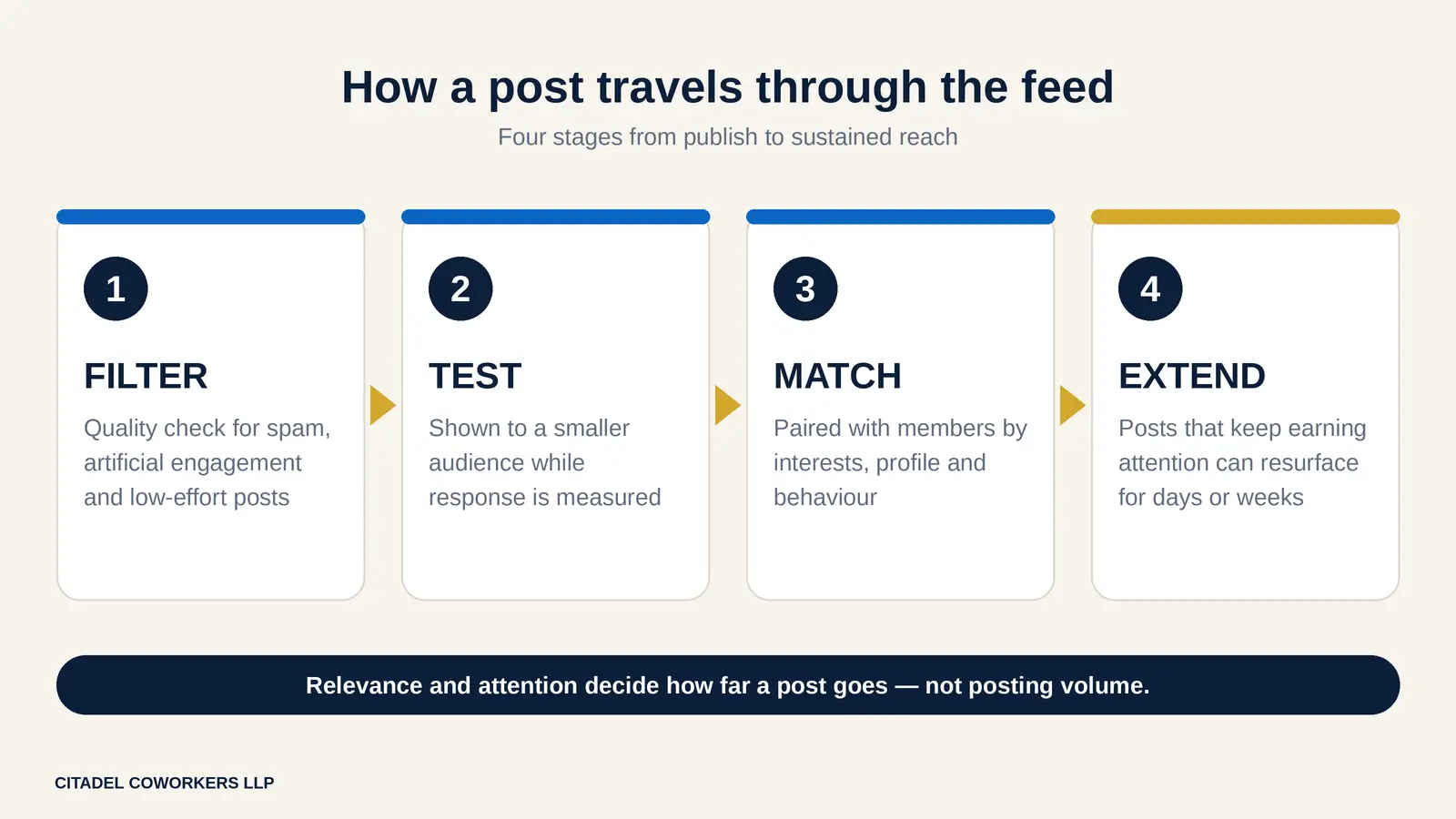
- Filter. A quality check screens for spam, artificial engagement and low-effect posts before anything else happens. Tagging unrelated people or excessively adding hashtags can trip it.
- Test. Distribution of your post starts with a smaller audience while LinkedIn watches how those readers respond.
- Match. Retrieval pairs the post with members whose profile and behaviour suggest it will be useful, which is why two followers of one page can see different feeds. Your own profile counts too: a headline that contradicts your content sends mixed signals.
- Extend. Posts that keep earning attention can resurface days or even weeks later.
The Signals That Earn Reach Now
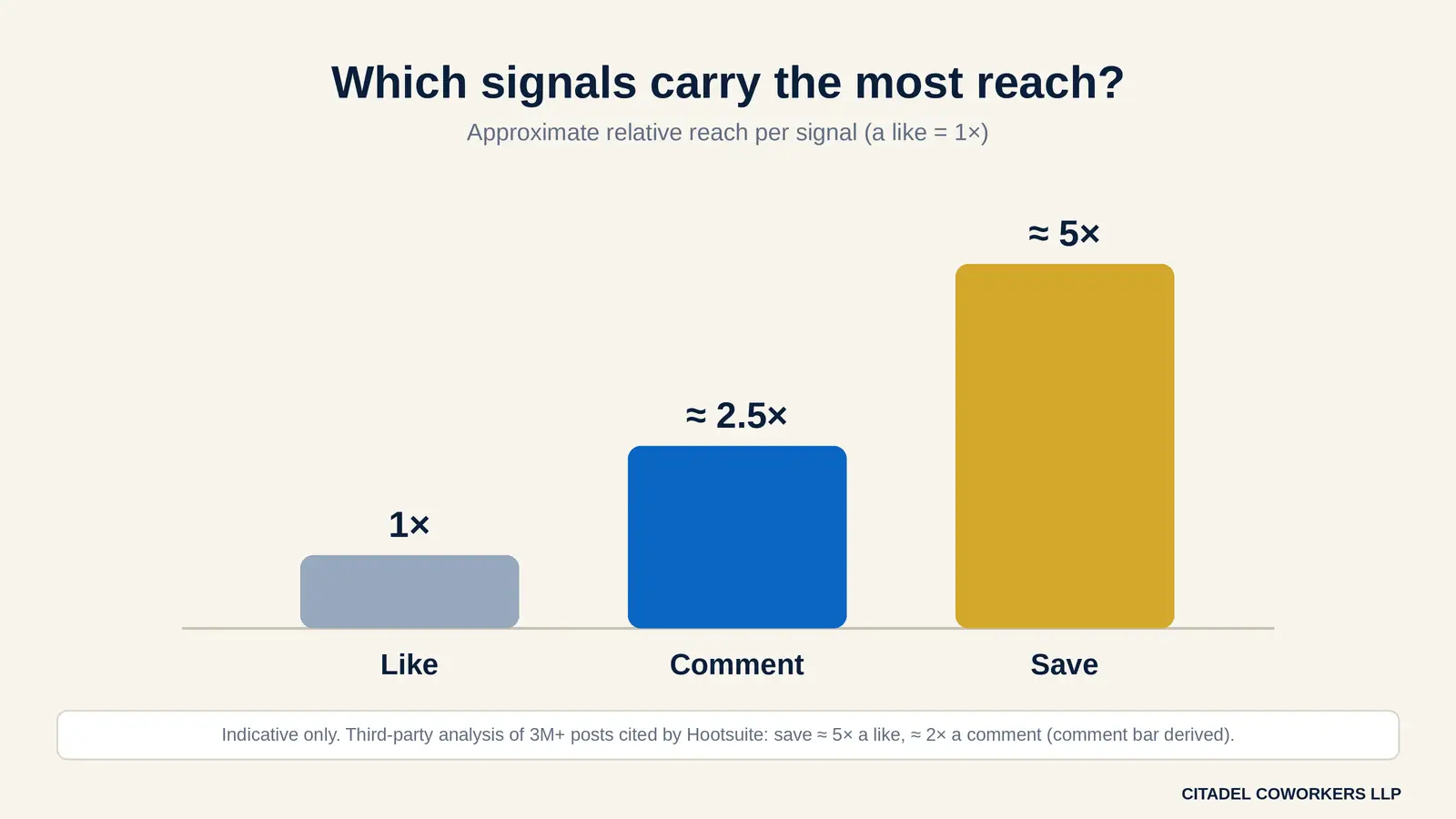
Attention beats applause. Dwell time, “see more” expansions, saves and comment depth tell the system a post was genuinely useful. One third-party analysis of more than 3 million posts, cited by Hootsuite, found a save can drive around five times the reach of a like. Treat that figure as approximate; the direction is what matters.
Comments count, but quality counts more. A thread where the author replies with substance signals real dialogue; a pile of one-word replies signals the opposite. Ask questions that invite experience, such as what broke first or what you would do differently, then show up to answer.
Format follows attention. Documents and carousels earn saves, native video is growing and posts that keep readers on the platform generally travel further than posts built to send them away. If traffic is the goal, accept narrower reach and judge the post by clicks and lead quality.
Build a LinkedIn Content Strategy Around Two or Three Themes
A workable LinkedIn content strategy starts narrow. When a page and its leaders keep returning to the same two or three themes, the system learns who the content is for and the right readers are found faster. Then apply a simple checklist:
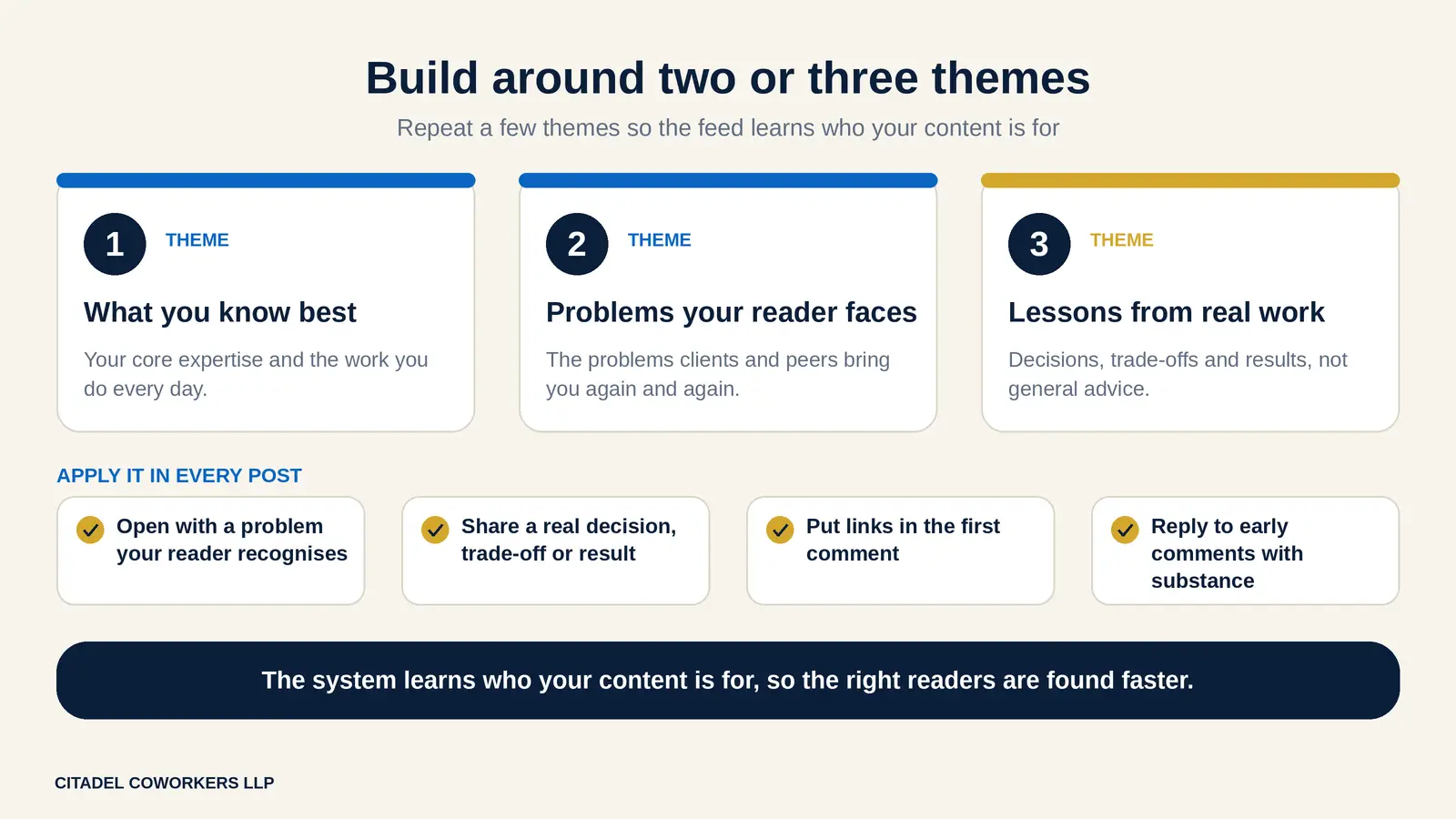
- Open with a problem your reader recognises, within the first two lines.
- Give a specific conclusion, trade-off or consequence, not broad guidance.
- For reach, keep the content native, and place links in the initial comment.
- Respond to early remarks with substance to deepen the thread.
- Align your headline and About section with the themes of your posts.
Then measure what the system measures. Keep track of the depth of comments, visits and inquiries to profiles, impressions, and repeat the formats that create these results. When a post performs, find out why before writing the next one.
Page or profile? Both follow the same rules, but company pages tend to win with proof and brand perspective, while executives win with stories and lessons. The strongest teams use both.
Your people are part of the system, too. When colleagues add their own perspective to company posts, they extend reach through their networks and add credibility no page can claim alone.
Not sure where you stand? Pull your last ten posts and ask which one a reader would actually save. If you would like a second opinion, the team at Citadel Coworkers is happy to talk it through.
Where AI Helps Your LinkedIn Reach And Where It Quietly Hurts
AI now sits inside almost every marketing workflow and used well, it cuts errors. It catches typos, mismatched figures and broken formatting, flags drift from brand voice and sorts performance data faster than any person could. Repetitive work is where small human slips pile up and that is where machines earn their place.
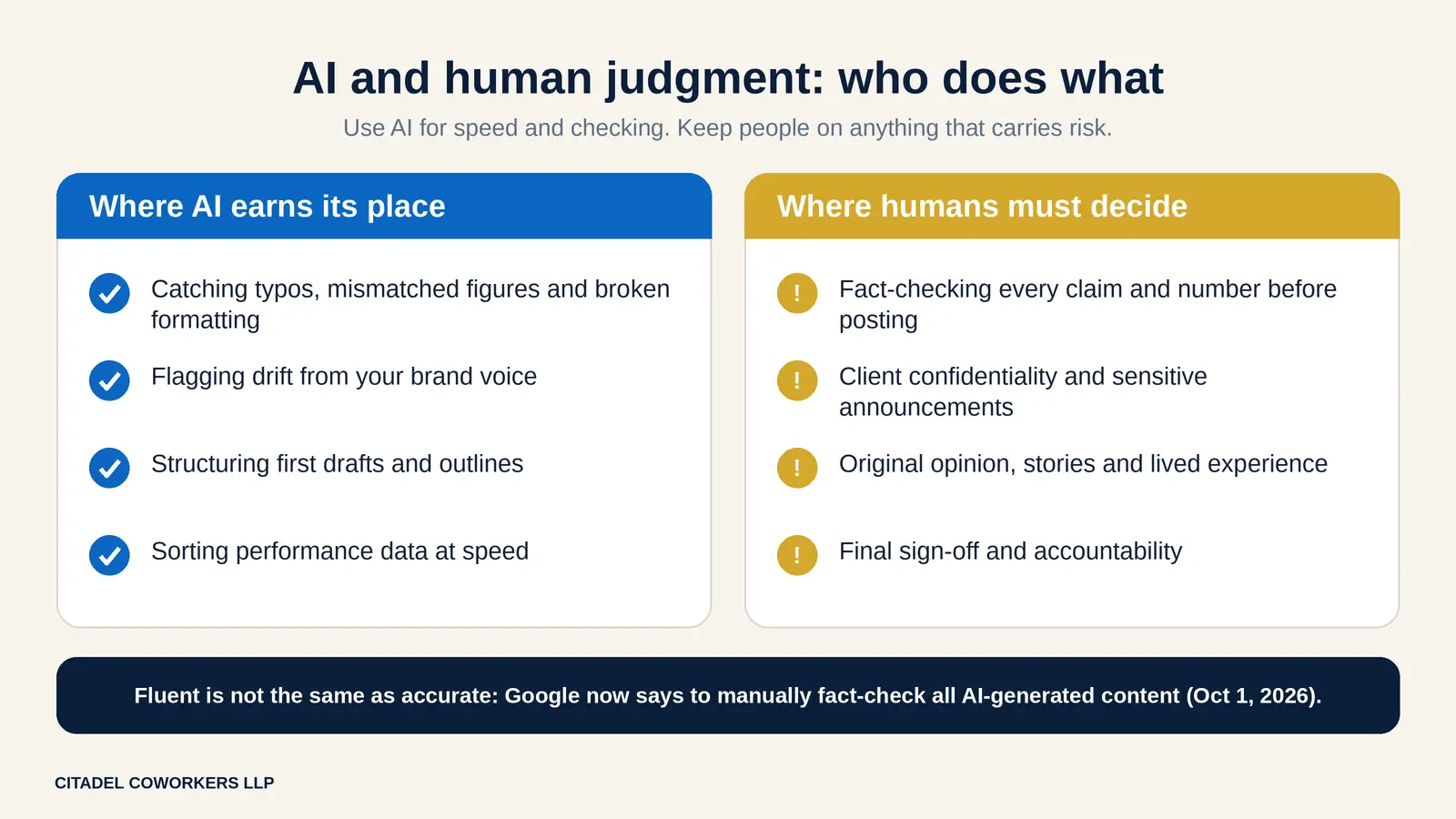
Trust has limits. On October 1, 2026, Google updated its Search guidance to call manual fact-checking of all AI-generated content critical, explaining that generative models predict likely words rather than retrieve facts. Fluent text can still be wrong.
Workplaces feel this too. A January 2026 Connext Global survey found only 17% of US adults using AI at work believed it could run with minimal human involvement, while 70% said reliability comes from AI plus review or oversight. It is a vendor survey, so treat the percentages as indicative.
On LinkedIn, the bigger risk is sameness. AI-assisted drafting is not the problem; generic output is, because templated posts produce shallow dwell time and few saves. Let AI structure drafts and check details; let people supply the story, the opinion and the numbers they have measured themselves.
Some decisions should never be delegated. Client confidentiality, regulated claims, sensitive announcements and public opinions carry consequences a model cannot weigh, because it does not know your relationships, risks or history. A person who does must sign off.
Remember who is reading. The system now reads for meaning and the person behind it reads for proof. That is not fear of AI. It is a business advantage: speed from the machine, credibility from the person.
Why Businesses Trust Citadel Coworkers to Turn Posts Into Authority
What separates a post people save from one they scroll past is rarely tooling. It is judgment. Citadel Coworkers treats LinkedIn marketing as a long game of earned attention rather than a posting schedule.
Three principles shape that approach. Expertise comes first, so posts begin with what your people actually know. AI is used for speed and error-checking, never as a substitute for a point of view. Success is measured in saves, conversations and qualified enquiries, not impressions alone.
Keeping people in the loop is part of that. Someone who understands your market reviews every claim, figure and tone choice before anything goes live, so speed never costs accuracy.
Before Your Next Post, Write For the Reader
Return to the complaint that started this guide: the same effort, less reach. The feed has not turned against you. It has become better at telling a post written for a reader from one written for a number.
The brands that do well from here will not be the ones that post most or even automate best. They will be the ones whose people still have something worth saying and the discipline to say it clearly. Open your last post, read it as a stranger would and ask whether you would save it.
Leave a Reply